WILDLIFE
Wise guy
After years of catastrophic decline barn owls are back, soaring silently above our hedges and ditches. We meet the man who has dedicated his life to the survival of this bewitching bird
by MIKE UNWIN
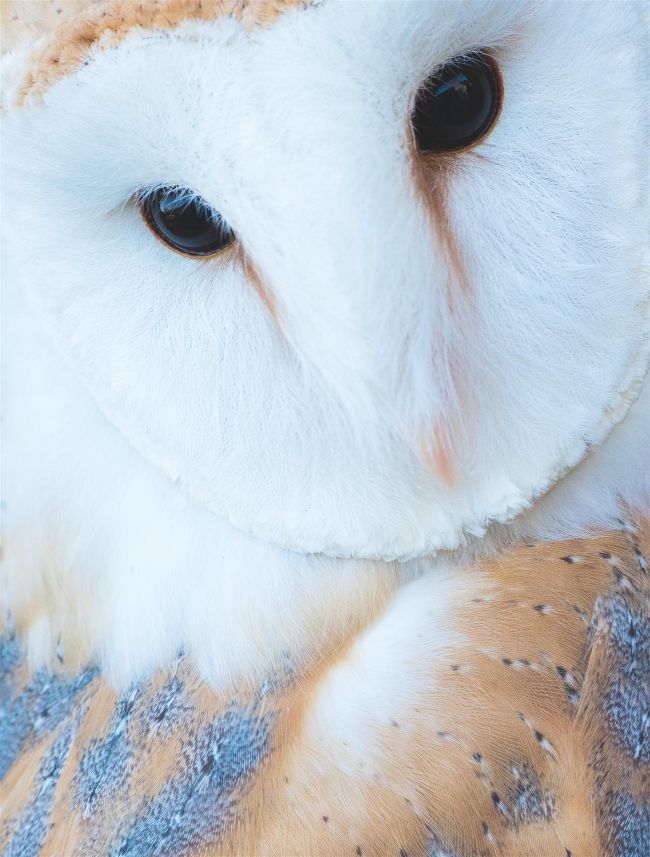
EDWIN GIESBERS/
NATUREPL.COM, JOHN WATERS/
NATUREPL.COM
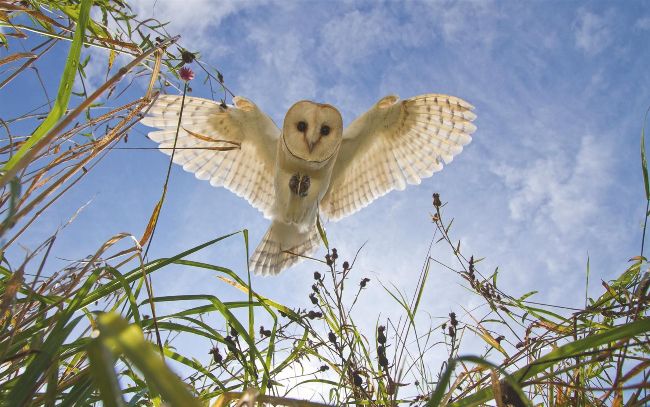
Taking flight
Above: barn owls require rough grassland to thrive
‘Head out at dawn or dusk anywhere with suitable habitat and watch for that ghostly shape floating over the fields’
It’s dusk and a pale bird is quartering the fields. Even at a distance, the erratic flight – dipping, hovering, wheeling – is clearly not a gull’s. Binoculars confirm what I’d hoped: a barn owl. I can see its big head and heart-shaped face and my heart races: it feels magical, a vision, almost.
Today, barn owls are a reasonably regular sight near my south coast home. But this wasn’t always the case. As a wildlife-obsessed child in the 1970s, I was puzzled by my inability to see one. According to the nature books I’d grown up with, barn owls were ubiquitous – emblematic of rural Britain. So where had they gone?
My childhood failures, it turns out, weren’t just down to bad luck. The UK barn owl population was then in freefall. The first nationwide survey, published in 1930, recorded 12,000 breeding pairs. By the early 1980s this had fallen to 4,000. One of our most iconic birds seemed fast-tracked for extinction. Today, happily, the British Trust for Ornithology (BTO) estimates a population of more than 12,000 pairs and rising.