WRITING LIFE
Before my memory fades
Zoë Richards has just become a debut novelist in her 60s. Here, she writes about the way her lived experience of mental health issues fed into writing the book whose themes of recovery and community achieved her lifelong dream of publication
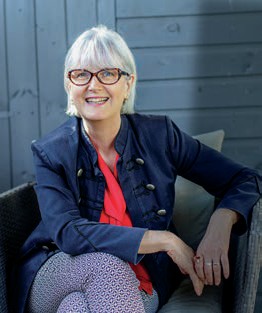
© Abby Wilkes
If you listen to my daughter, I am aging fast, and losing my faculties – reader, I can assure you, I am not. I have plenty of faculties still remaining at 62, and dementia is a good many years off, despite it being in the family.
And yet as I watch my mother’s memories fade, erase, distort, and in some cases, completely alter, I realise that I, too, will one day recall life events differently.
Is this why I felt the need to write a novel and get it published in my sixties? Actually, no, it’s a lifelong dream that was bound to catch up with me. My childhood memories are of me writing – plays that my sister and I put on for our parents; short stories to entertain my teddy bears with, and believe me, they were very entertained; the school’s first newsletter (it would be too grand to call it a newspaper); poems to work my way through my teenage angst. I continued to write throughout my adulthood, but I don’t know if you’ve noticed – a novel is considerably longer than a poem or a short story, and every attempt I made fizzled out around 15,000 words. I did have one novel that I worked much harder on. I was in my thirties, so this will have been in the 1990s. Writing Magazine had an article written by an agent who offered to read the first 3,000 words of readers’ work. I snapped up the chance and sent her my writing. Her feedback was kind and amazing, and yet I used it as a full stop, and didn’t write anything for a few years.