View offers: whf.cm/BestTelevisions2024
TELEVISIONS
As TV tech marches on, 2024’s sets are visually more impressive than ever
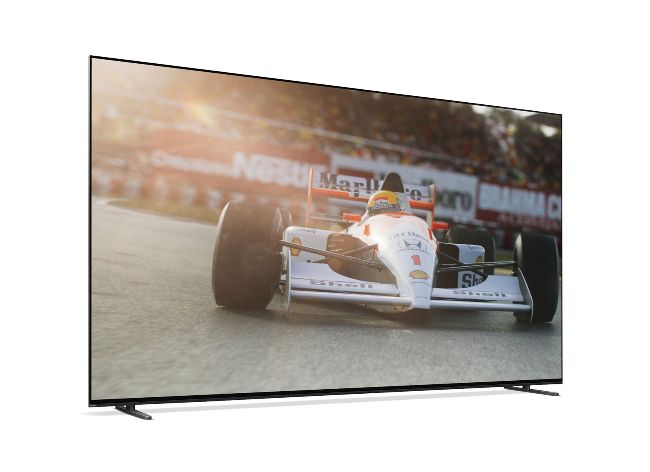
Screen images: Senna. Courtesy of Netflix

Sony is pushing higher maximum brightness with its latest OLED
■ Sony Bravia 8 £2099
The Bravia 8’s predecessor, Sony’s A80L, was a What Hi-Fi? Product of the Year winner last time around, and remains a stellar OLED TV. This means that the very fact Sony has managed to improve on it at all is impressive, especially as the upgrades target the key areas cinephiles care about.
Its WOLED panel is quoted as being 10 per cent brighter, making the Bravia 8 the latest of many OLED TVs at this price to market higher maximum brightness as a key reason to upgrade.
As with all the new TV chips we’ve seen this year, the set’s Bravia XR chip promises to leverage AI to improve the set’s picture processing and let it deliver an even more authentic, natural-looking home cinema experience – something it largely manages.
HDR10, Dolby Vision, HLG and IMAX Enhanced mode are on board and, while only two of the set’s four HDMIs meet the 2.1 standard, 120Hz/4K, VRR, ALLM and Dolby Vision Gaming are supported.
After a bit of fandangling with picture settings, we find we get the best results in ‘Professional’ mode – Sony’s Filmmaker mode equivalent, that aims to reduce processing to its absolute minimum and offer a picture as the director intended.
Watching Dune, the Bravia 8’s picture is wonderfully natural, with characters’ skin tones and the brown hues of the rebels’ desert suits offering a suitably realistic tone. Motion handling is beautiful, and we don’t see any artefacts as Ryan Gosling’s car zooms over the farm in Blade Runner 2049. Dark areas retain oodles of detail, even in the dimly lit home, creating, once again, a more natural picture. The Bravia 8’s light control has been refined, giving the picture even more depth and a wonderful three-dimensionality. Light leaking into a dark room oozes detail from its reflections, while offering a true sense of depth. The black and white scenes in Oppenheimer, meanwhile, reveal exceptional levels of detail in every stitch and weave on characters’ suits and ties. The picture is wonderfully sharp, with characters and objects holding a true sense of depth and separation from the background.
Testing those peak-brightness claims with Pan, a terrible movie we use to test peak brightness due to its atypical 4000nits mastering, the Bravia 8 continues to impress, delivering immersive peak brights that retain a tad more detail than the A80L.
Sony’s Acoustic Surface Audio+ technology involves actuators that vibrate the whole screen to generate sound, and while the TV’s audio is slightly bass-light, it makes up for this with exceptional control, especially in the Cinema sound mode.