HOW MUCH GRAVITY DO WE NEED
For Long Duration Spaceflight?
by Jeff Greason, NSS Governor
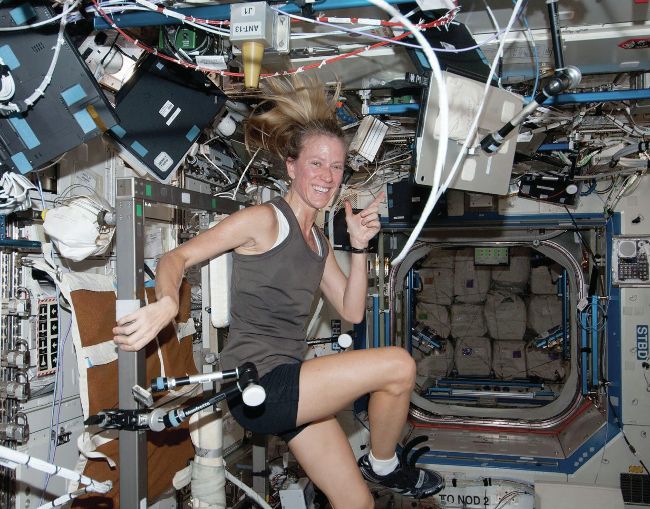
Credit: NASA
The hazards of growing up in low gravity are a staple of science fiction, in print and on screen—the emaciated build of Larry Niven’s Belters or the delicate constitutions of the permanent off-worlders in The Expanse are just two examples. Now that we are reaching the point where commercial and government efforts to create settlements on the Moon or Mars might become a reality, many are concerned about the hazards of lunar and Martian gravity over the long-term. As science fiction, that’s certainly an appropriate topic. But in reality a higher standard is called for, and the truth is that we know almost nothing about the longterm risks to human health in partial gravity environments.
Of course, humans evolved in a one-g environment, and we now have decades of data on microgravity, or zero-g environments, and have learned that long-term exposure to zero-g has a negative impact on our health. The initial concern, which turned out to be valid, was that without the resistance for maintaining muscle tone, muscles would atrophy. Skylab, Mir, and the International Space Station have given us a lot of data on that, and over time exercise equipment and regimens for zero-g that overcome much of that specific risk have been developed.