FOCUS ON
NEW MARS MAP REVEALS HISTORY OF THE RED PLANET
Mars used to be much wetter than scientists thought
Reported by Robert Lea
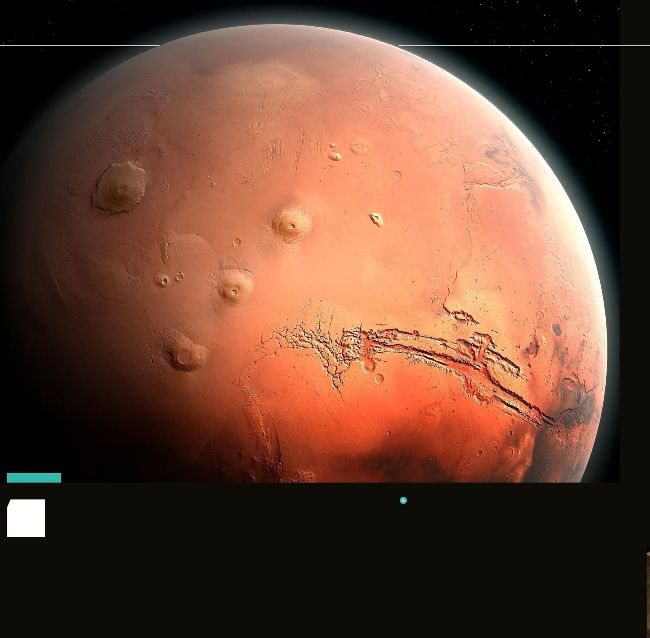
Mars is a dry and desolate place now, but once had seas and lakes like Earth
A new map of mineral deposits on Mars could not only change our understanding of past water distribution on the Red Planet, but also help create a map for future Mars exploration, including crewed missions. It’s revealed an unexpected abundance of minerals created by the interaction of rock and water, with hundreds of thousands of formerly water-rich areas discovered in some of Mars’ most ancient regions. The map could lead to a more detailed investigation of Martian geology, revealing what happened when Mars changed from a planet like Earth to the dry and arid world we see today and whether the planet was ever capable of supporting life.
“I think we have collectively oversimplified Mars,” John Carter, assistant professor at Institut d’Astrophysique Spatiale and part of the team behind the map, said. “The evolution from lots of water to no water is not as clear cut as we thought; the water didn’t just stop overnight.” He also explained that Mars’ complex geology may be more similar to that of our planet than previously thought. “We see a huge diversity of geological contexts, so no one process or simple timeline can explain the evolution of the mineralogy of Mars. If you exclude life processes on Earth, Mars exhibits a diversity of mineralogy in geological settings just as Earth does.”