ASTROPHYSICS
What are X-ray binaries?
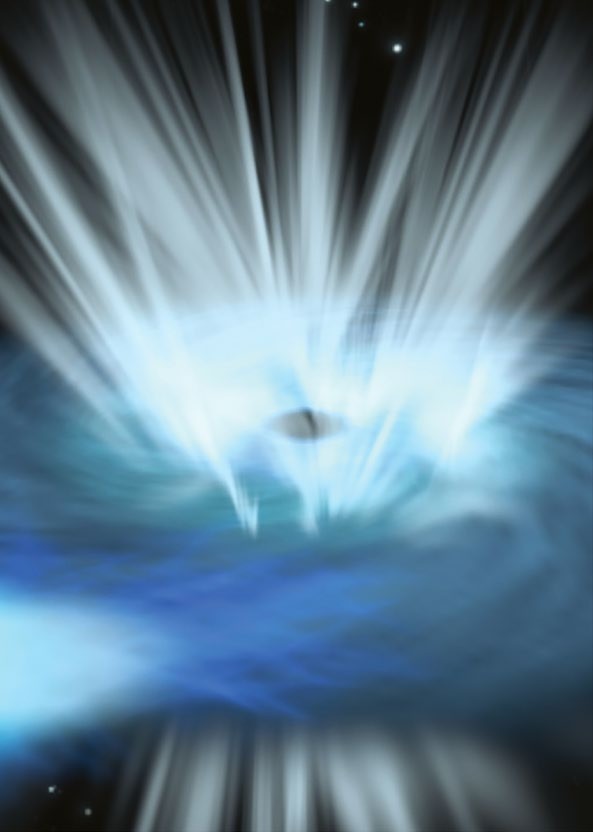
X-ray binaries are categorised by the stellar mass of their companion stars
An X-ray binary has a compact object, like a stellar black hole or a neutron star, and a companion star that is normal like our Sun. The compact object and the companion orbit around each other, bound together by gravity, and they’re close enough that the compact object slowly eats its friend. As it drains material from the companion and gathers it together to eat it, this material gets hotter than the surface of the Sun and shines very bright in X-ray light. How the compact object eats its companion depends on how massive the companion is. If the star is bigger than our Sun, it will have big clouds of wind coming off it, and as the compact object passes through the wind, it gobbles up the gas in its path. We named these systems high-mass X-ray binaries since the companion is big. If the companion is smaller than our Sun, then the compact object swirls the star’s gas around itself, as if the compact object is sitting in the middle of its own dinner plate. This swirling plate of gas is called an accretion disc, and these systems with small companions are called low-mass X-ray binaries.