WATER!
THERE’S NOTHING MORE IMPORTANT FOR OUR SURVIVAL
BY MICHAEL D’ANGONA
There truly is only one rule about water that needs to be learned — if you don’t have it, you’re guaranteed to die. As morbid or blunt as this statement may be, it describes nothing but the truth, both from a scientific perspective, as well as from the mindset of a prepper or survivalist.
Three days, maybe four, depending upon the circumstances, is all it takes to go from a healthy, never-give-up adventurer to a dehydrated, nearly lifeless shell of a person, when the body is being denied this life-sustaining liquid. Although this scenario may seem unlikely due to the fact that humans live on a planet containing nearly 326 million trillion gallons of water (that’s 326,000,000,000,000,000,000), it is a very real possibility and one that man y humans across the Earth face every single day.
Now, with winter coming hard and cold weather in your area, finding and knowing how to treat water in a cold environment should be at the t op of everyone’s to-do list. You never know when your daily routine will come to a screeching halt and all you have to depend upon is y our knowledge, your skills and your thirst to survive.
1.0 THE BASIC NEEDS
Water has numerous uses. Aside from the most obvious and most important use, drinking, there are other tasks during both everyday routines, as well as in sur vival situations, where water is used. These include washing clothes, watering crops, sustaining livestock and other animals, and for use in cooking and with personal hygiene.
This variation of needs is where many individuals underestimate their water needs and, as such, face at least an uncomfortable situation until extra water is secured, or at the very worst, the risk of dying from dehydration.
So, with all that being s aid, how much water does a person actually need to exist comfortably?
1.1 Personal Consumption
There is no exact answer as to how much a person needs to drink per day because there are just too many variables that must be taken into consideration. First, the size and gender of a person are two factors. For example, a man weighing 280 pounds requires more water than a woman weighing 127 pounds. Also, the environment where a person lives partly determines water needs. In a warm climate, a person generally loses water quicker (through sweating) than in a c ool or colder area. Finally, the amount of physical exertion, such as shoveling or chopping wood, one does throughout their day also proportionally determines water needs. The more physical one gets, the more they sweat, and hence, the more water they need.
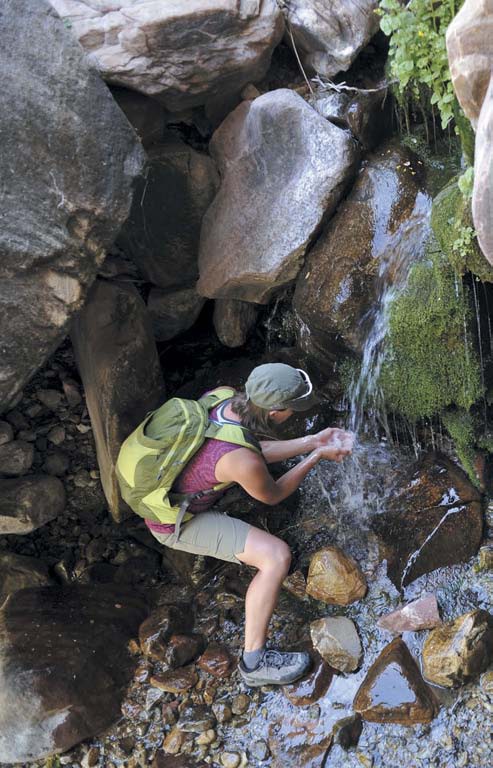
Standing or flowing water in ponds or streams may appear clear, but the only way to be sure contaminants have been removed is to process it before drinking or using it.
© GETTY IMAGES