Architectural POTTERY
Immersed in postwar optimism, this innovative ceramic company reimagined planter and garden sculpture, radically embracing the future of design.
By Brenda Klug and Jickie Torres Photos courtesy of Phaidon
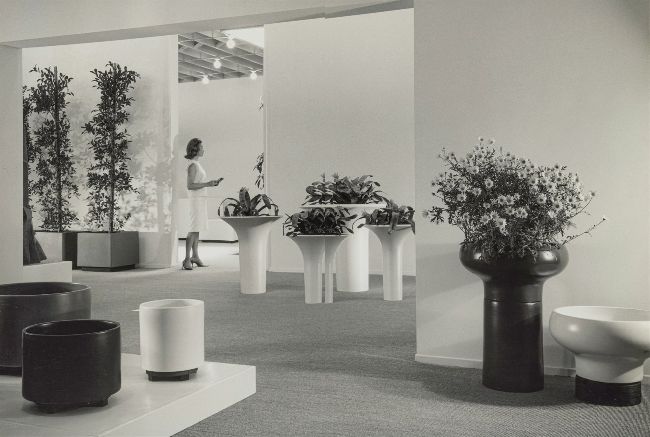
THE ARCHITECTURAL POTTERY SHOWROOM ON ROBERTSON BOULEVARD IN THE MID 1960S. PHOTO CREDIT: MAX AND RITA LAWRENCE, ARCHITECTURAL POTTERY RECORDS (COLLECTION 1587). UCLA LIBRARY SPECIAL COLLECTIONS, CHARLES E. YOUNG RESEARCH LIBRARY, UNIVERSITY OF CALIFORNIA, LOS ANGELES.
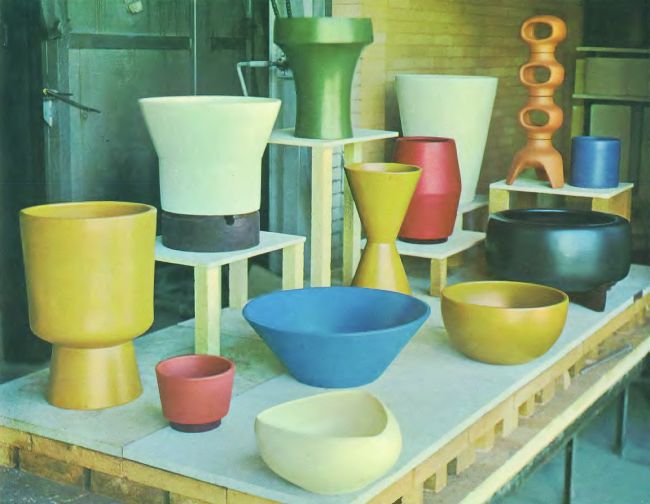
A PAGE FROM THE ARCHITECTURAL POTTERY ISSUE 64 SHOWS A SELECTION OF PLANTERS IN VARIOUS MATTE GLAZES WITH A “MUTED LUS-TRE.” COLORED GLAZES WERE INTRODUCED BY DAVID CRESSEY. PRIOR TO HIS WORK, MOST OF THE ARCHITECTURAL POTTERY’S PLANTERS CAME ONLY IN BLACK, WHITE AND UNGLAZED BISQUE. PHOTO CREDIT: PRIVATE COLLECTION

MAX AND RITA LAWRENCE, C. 1959. PHOTO CREDIT: BOB LOPEZ; LAWRENCE FAMILY ARCHIVE
IN 1945, JOHN ENTENZA LAUNCHED the groundbreaking Case Study House project, which aimed to inspire, influence and convince the world at large of a new modern way of living. Five years later, his friends Max and Rita Lawrence launched their company Architectural Pottery. Born out of Los Angeles, where many of the Case Study houses were concentrated, they aimed to produce pots and planters that looked like they belonged in these homes. The company, responsible for some of the era’s most striking and iconic planters and ceramics, spanned three decades. Architectural Pottery, Ceramics for a Modern Landscape by Dan Chavkin, Jeffrey Head and Jo Lauria is the first book to document the history, evolution and lasting impact of this groundbreaking studio.