LIGHTS, CAMERA, TRANS ACTION!
In the face of the government stepping away from trans allyship and the news media platforming anti-trans views, is television the last safe space for trans visibility?
Words Jamie Windust
Elleven years on from the ‘transgender tipping point’ — a term coined by Time magazine when it featured Laverne Cox on its cover, and a moment of self-visualisation and representation for many a trans person — the scales still seem desperately unbalanced for trans and nonbinary people. Despite the strides of progress within entertainment, socially, politically and economically, trans people have been at the mercy of an evolving and organised conservatism that has taken hold in the UK and the US. With a sense of uncompromising pride and moral certainty, both the previous Conservative and current Labour government and the Trump administration’s time in power have put trans people’s lives in the cross hairs.
Transphobic rhetoric has risen to new heights. With the UK’s Supreme Court ruling in April identifying what a ‘biological woman’ is, alongside Trump’s executive order in the States instilling binary gender as a priority in his first 100 days, with the aim of restoring “biological truth to the Federal government”, the once small waves of gender-critical opinion are causing seismic shifts in the way gender is presented legally.
The digital and print media are to blame too. According to news outlet Novara Media and trans rights activist MimmyMum, the UK media has published an average of 154 articles on trans issues every single month since 2015. Ever since 2014’s ‘trans tipping point’, the press coverage of trans lives has increased with exponential hatred. In January 2014, the Daily Mail published seven stories on trans issues, and in 2023 that number had increased by a staggering 1,817 per cent to 115 stories in just 31 days, all critical of trans lived experiences, with that number expected to continue to rise.
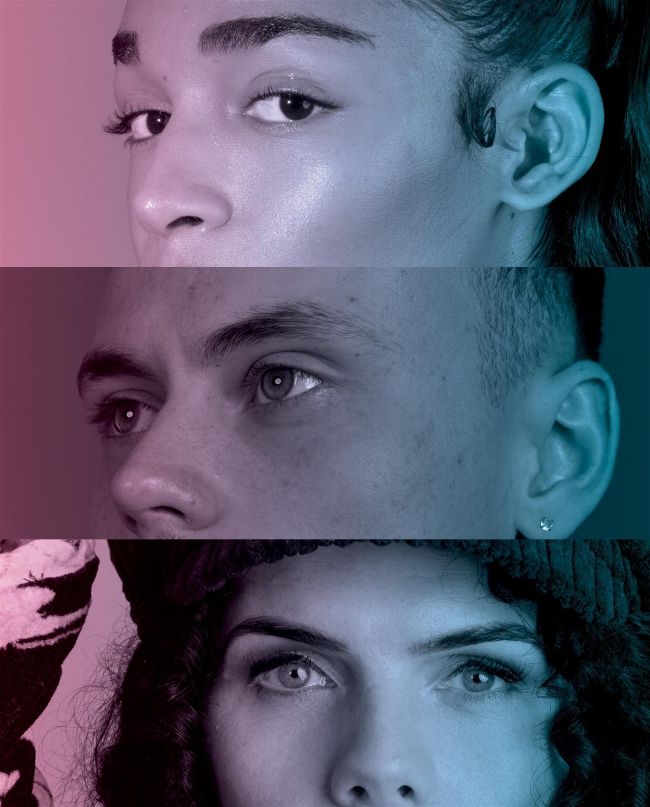
Photography Francisco Gomez de Villaboa
Such anti-trans reporting has had a negative impact on social attitudes to trans people in the UK, with the result that they are drastically worse than they were even just three years ago. According to YouGov, the number of people who believe that you should not be able to change your gender legally in the UK has increased by 16 percentage points since 2022, to 36 per cent. Even younger folk aged 18–24, who had previously held more liberal views, have become more conservative, with only 50 per cent saying that trans people should be allowed to legally change their gender. This is down from 57 per cent three years prior. With 41 per cent of Britons stating that they have paid “a lot” or “a fair amount” of attention to the topic of transness within politics and the media, it’s clear that traditional media has a strong influence on non-trans people’s views of the community as a whole.
“IT’S DANGEROUS TO SIT BACK. REPRESENTATION IS SOMETHING THAT’S STILL ON A KNIFE EDGE”
SEEN AND HEARD: Alex Thomas-Smith says seeing Nadia Almada in Big Brother was a “revelation”
But in the entertainment industry, we have seen inclusive representation of trans and gender-diverse stories steadily increase since the 2010s. From Laverne Cox’s debut in Orange Is the New Black in 2013, to her continued work as Gail in Promising Young Woman, and earlier this year her own Prime Video comedy series Clean Slate, Cox’s personal timeline in the industry represents how, during the past decade, trans stories have moved from B plots to supporting parts to trans actors rightfully taking lead roles.