AU
  
You are currently viewing the Australia version of the site.
Would you like to switch to your local site?
2 MIN READ TIME

Satish Dhawan

He was a pioneer and innovator for Indian space science

25 September 2020 was the 100th anniversary of the birth of famous Indian rocket scientist Professor Satish Dhawan. He is considered to be the father of experimental fluid dynamics research in India and was key in making the nation’s space program what it is today.
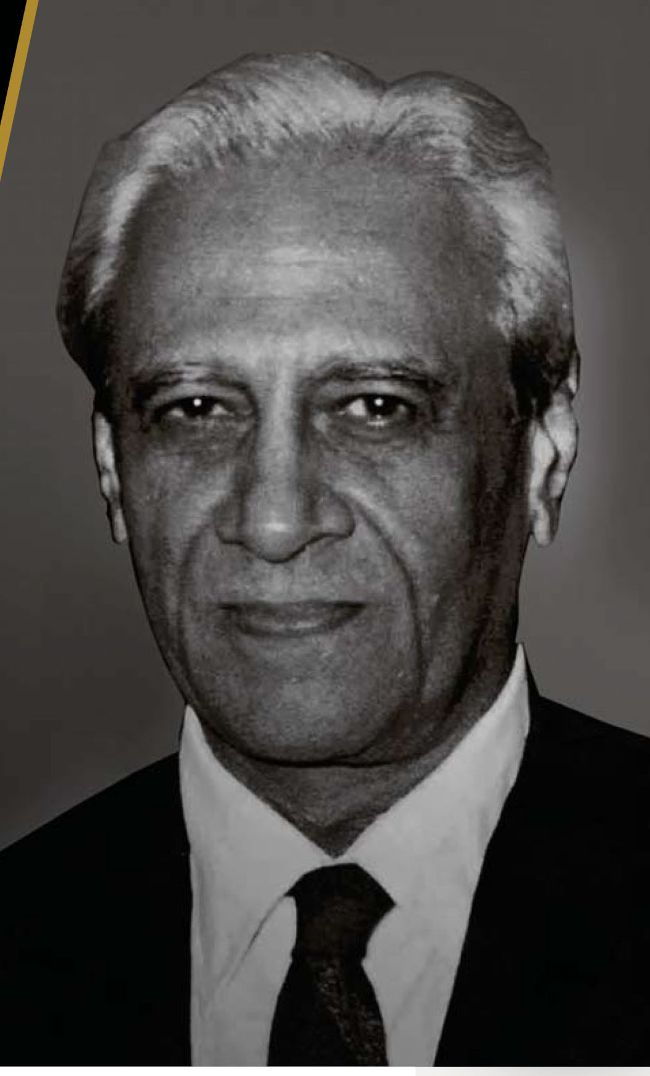
There is an Indian space launch centre now named after Dhawan
© ISRO

Dhawan was born in Srinagar, India, and was well educated, with a peculiar array of qualifications gained from the University of Lahore, now in Pakistan. This includes a bachelor’s degree in physics and mathematics and a master’s degree in English literature, finished off with a bachelor’s degree in mechanical engineering. His inquisitive academic nature then took him abroad to the US, where he received a master’s degree in aeronautical engineering in Minneapolis and a PhD in aeronautics and mathematics from the California Institute of Technology (Caltech). It was here, under the tutelage of Hans W. Liepmann, where his interests in fluid dynamics peaked.

Unlock this article and much more with
You can enjoy:
Enjoy this edition in full
Instant access to 600+ titles
Thousands of back issues
No contract or commitment
Try for $1.48
SUBSCRIBE NOW
30 day trial, then just $14.99 / month. Cancel anytime. New subscribers only.


Learn more
Pocketmags Plus
Pocketmags Plus

This article is from...


View Issues
All About Space
Issue 109
VIEW IN STORE

Other Articles in this Issue


In This Issue
WELCOME
If you could imagine a place where life might exist
LAUNCHPAD
LAUNCH PAD
The long-serving Hubble Space Telescope continued to capture stunning sights
New research finds that the Moon is rusty
The Moon is turning ever so slightly red, and it’s
The Andromeda Galaxy’s halo is more massive than initially thought
Galactic halos are both more massive and more complicated than
Same black hole can collide with its kin multiple times, lopsided merger suggests
For black holes, a collision doesn’t have to be a
Earth may have been born wet
Earth may not have needed asteroid and comet strikes to
Scientists spot a triple star system shredding its planet-forming disc
Groups of stars can tear their planet-forming disc to shreds,
Buff space mice to stop astronauts losing bone and muscle mass
In December last year scientists launched 40 mice from NASA’s
SECRETS OF THE OCEAN WORLDS
Earth isn’t the only world which accommodates water. There are
FUTURE TECH
DYSON SPHERE
First proposed by physicist Freeman Dyson in 1960, a Dyson
INTERVIEW
“WHY I REINVENTED SPACE AND TIME”
It takes a brilliant mind to imagine what the universe
STRANGEST MOONS IN THE SOLAR SYSTEM
All but two of our Solar System’s planets have satellites
FOCUS ON
EXTINCTION BY SUPERNOVA
One of the worst extinction events in Earth’s history may
DARK STARS
A star dies. A sudden flash of light signifies the
STAR PROFILE
Betelgeuse
Betelgeuse, or Alpha Orionis, has had an eventful 8.5 million
ENTER THE COSMIC BATTLEFIELD VIOLENT UNIVERSE
As ultraviolet radiation cascades down from space, Earth’s place as
ASK Space
Stars across the universe, like our own Sun, are typically
HOW TO TAKE AWARD-WINNING ASTROIMAGES
Like the fields and rolling green hills of the countryside
STARGAZER
What’s in the sky?
In order to preserve your night vision, you should read
This month’s planets
For the first time since 2018, the Red Planet, Mars,
Copernicus
Copernicus looks the most impressive just after first quarter or
Naked eye & binocular targets
The brightest star in Cygnus, the Swan, blue-white Deneb is
Autumn’s fading galaxies
Sliding into November, it’s only natural to swing your telescope
The Northern Hemisphere
As we leave autumn and roll towards winter, the ever-darkening
Vixen A70Lf with Mini Porta mount
Vixen has kept the novice astronomer in mind, making the
Chat
X
Pocketmags Support