We know bread baking can be intimidating, but these foolproof recipes by Kitty and Al Tait are a great place to start your love affair with loaves!
We know bread baking can be intimidating, but these foolproof recipes by Kitty and Al Tait are a great place to start your love affair with loaves!
Eva’s tea loaf
MAKES 2 LOAVES / 10 SLICES
250g dried fruit (we use a mixture of figs, dates, apricots and raisins)
1tsp ground cinnamon
1 Earl Grey tea bag
250ml boiling water Grated zest and juice of
1 orange
250g self-raising flour
100g soft light brown sugar
100g cereal (we use a mixture of cornflakes and muesli – you want something with a bit of crunch)
1 large free-range egg, beaten
1 Lightly oil two 450g (1lb) loaf tins or one 900g (2lb) loaf tin. Cut two long strips of parchment paper. Drape one paper strip over the base of each tin and then up and over the sides. (The overhanging ends can be used to ease the cooked loaf out of the tin.)
2 Chop the dried fruit up into small pieces and place in a large bowl with the cinnamon. Add the tea bag to the bowl and pour over the boiling water. Leave for a few minutes to steep and then add the orange zest and juice, stir everything together and leave to cool.
3 Preheat the oven to 180°C/Gas Mark 4.
4 Once the mixed fruits have cooled and been infused with the Earl Grey flavours and the orange, drain away the soaking liquid and discard the tea bag. (The tea bag will be well hidden, so you may have to dig around to find it.)
5 Sift the flour into the bowl over the plump, soaked fruits. Add the sugar, your chosen cereal and beaten egg, then stir with a wooden spoon until everything is thoroughly mixed.
6 Spoon the cake mixture into the prepared loaf tins and bake in the hot oven for about 1 hour or until risen and golden on top and a wooden skewer or toothpick inserted into the centre comes out clean. If you’ve gone for a big 2lb tin an extra 20 minutes should work fine. If it looks as if it is getting too dark on top after an hour just slip a piece of foil over the tin.
7 Allow the loaves to cool in their tins for five minutes. Using the strip of parchment paper, ease each cake out of its tin and pop it onto a wire rack to cool completely.
Miracle overnight white loaf
All you need to make a loaf twice as tasty as anything on the supermarket shelf, with a crunchy crust and pillowy crumb, is a casserole dish with a lid and an oven that can get up to 230°C/Gas Mark 8.
MAKES 1 LOAF
500g
strong
white
bread
flour,
plus
extra
for
dusting
10g
fine
sea
salt
3g
instant
dried
yeast
(1tsp
or
slightly
less
than
half
a
7g
sachet)
330ml
lukewarm
water
1 Sift the flour into a large mixing bowl and add the salt and yeast. Stir everything together using either a sturdy spoon or your hands. Bit by bit, gently mix in the lukewarm water until a shaggy dough forms.
2 Place a damp tea towel or shower cap over the rim of the bowl and leave in a cosy, draught-free place to prove for hours; overnight is best. Like the fairy godmother turns a pumpkin into a carriage, time transforms your scrappy, dull dough into a bubbly, live creature of its own.
3 Once your dough has risen and is bubbling away, tip it out onto a lightly floured work surface. Remember it’s alive so the greater respect you show the dough with gentle handling, the more it will reward you and the better your loaf will come out. Gently shape the dough into a ball – awell-floured plastic dough scraper really helps here – making sure there is a light coating of flour all over.
4 Place the shaped dough on a sheet of parchment paper, cover with a damp tea towel and set aside in a warm, cosy place to rest for one hour.
5 Halfway through the resting time, preheat the oven to 230°C/Gas Mark 8 or as high as it will go. Put a large cast iron casserole dish with a lid and a heatproof handle into the hot oven for 30 minutes to heat up.
6 Once the casserole dish is good and hot, carefully take it out of the oven and lift off the lid. Uncover the dough and, using the parchment paper, lift and then lower the dough into the heated casserole dish. Using a sharp knife, razor blade or scissors, score the top of the dough with slashes in any pattern you like, one long slash, a cross, a square or even a smiley face. You might want to invest in a baker’s lame for this, basically a razor blade in a stick and cheap as chips but, alongside your dough scraper, a good friend.
7 Pour a couple of tablespoons of water inside the casserole around the dough, replace the lid and put the dish back in the hot oven. Bake for 30 minutes with the lid on. Remove the lid to reveal your magnificent loaf and then continue to bake uncovered for a further 10 minutes to get a nice, golden crust or 15 minutes if you like your loaf a bit darker.
8 Place the loaf on a wire rack and leave to cool for at least 30 minutes. This is the hardest part, but it’s also the most important as the bread keeps cooking after you take it out of the oven. If you listen carefully, you might even hear the loaf sing, this is the ‘breadsong’. Just don’t scorch your ear… You’ve just made bread. No mess, though I always find a way. No kneading. Just magic. And a little fermentation.
Soda bread
This is just about the quickest bread you can bake. The best soda bread in the world is made in Ireland and this loaf feels like you’re being hugged by a Galway granny. At its most basic, you just need plain flour and bicarbonate of soda. The bicarb pretty much starts doing its work as soon as you have mixed it with anything liquid, so speed is important. There’s no kneading required and it can be a bit messy, but it still amazes me that something so tasty can come from something so fast. Buttermilk is great to use, if you can get hold of it, but you can create your own by adding a tablespoon of lemon juice to whole milk.
MAKES ONE LOAF
250g
plain
flour
250g
wholemeal
flour
50g
oats
(any
type
works
–
jumbo,
rolled,
porridge,
etc.)
1tsp
bicarbonate
of
soda
10g
fine
sea
salt
1tbsp
sesame
seeds
(optional)
420ml
buttermilk
(or
420ml
whole
milk
and
1tbsp
lemon
juice
whisked
together
and
left
to
curdle
slightly
for
5
minutes)
1tbsp black treacle (optional, but really lovely)
1 Preheat the oven to 200°C/Gas Mark 6 and line a baking tray with parchment paper.
2 Sift both the flours into a large mixing bowl and then add the oats, bicarb, salt and sesame seeds (if using). Make a small well in the centre and pour in the buttermilk and black treacle (if using). Stir until there are no visible patches of dry flour, but don’t overmix. Don’t worry if your dough resembles a wet sandcastle at this point.
3 Scoop your dough out onto a lightly floured work surface and shape into a round. It’s a sticky dough so you may want to coat your hands in flour or use a well-dusted dough scraper. Transfer the shaped dough onto the lined baking tray. Using a sharp knife, cut the traditional deep cross into the loaf (this is to keep bad spirits away, and you never want these in your kitchen). So that the loaf keeps the cross shape while baking, cut deep to within 5cm of the base.
4 Bake in the hot oven for 40-45 minutes. Transfer to a wire rack and leave to cool for 30 minutes before slicing.
Serving suggestion: With cheese, cheese, and a bit more cheese.
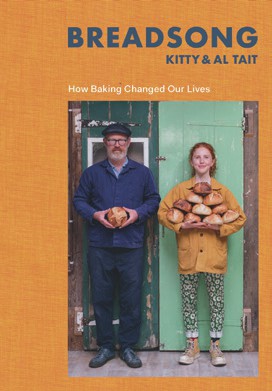
The recipes on pages 23-25 are taken from Breadsong by Kitty Tait and Al Tait, published by Bloomsbury (£20 RRP, Hardback).
Photography ©
Mark Lord.