SOLAR ELECTRIC PANELS
Generating electricity from sunlight via solar PV is a popular renewable tech – but how can you balance sustainability versus efficiency? Nigel Griffiths takes a look
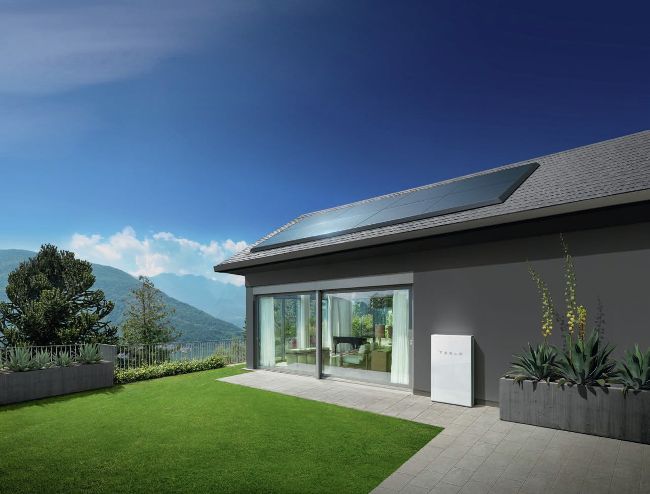
Above: Tesla’s on-roof, 400W -rated solar panels feature a chamfered surround for a low-profile look, and come with a 25 year guarantee. The company also offers a PV tile solution, as well as the Powerwall range of home battery storage (
tesla.com)
COURTESY OF TESLA, INC
According to the Microgeneration Certification Scheme (MCS), the body responsible for certifying low-carbon energy technologies and contractors, the number of annual solar electric panel installations in the UK more than doubled in 2022 to over 130,000. No doubt the homeowners specifying this renewable technology are hoping to make a sizable dent in their future energy bills – but the question is, will they be successful?
In an ideal world, electricity generation from PV would be consistent throughout the year. The equipment installed would be locally produced, with minimal embodied energy and embodied pollution. There would be no peaks and troughs in production, and the battery storage needed to shift daytime generation to night time use would be both cheap and low impact. What I’m driving at is that, as well as costs and energy savings, we need to think carefully about overall environmental impact when trying to work out the optimal size and type of system to install. Ultimately, if you are decided on installing PV, then you’ll want the system to be as efficient as possible and tailored to your particular project goals.