Getting the most out of an air source heat pump
This renewable tech has become popular amongst self builders, but how can you tell if it’s the best heating solution for your property and what can you do to get the best performance from your system?
Emily Smith
So you’ve decided to warm your home (and possibly generate hot water) by installing an air source heat pump (ASHP). But is this tech the right solution for your home and will you actually experience an energy-efficient and cost-effective result?
These sustainable heat generators are marketed as low-maintenance options that can achieve lower fuel bills and carbon emissions, plus you may even make some money back through the government’s Renewable Heat Incentive (RHI) scheme. But the answer to whether this is the best solution for you will depend on various factors. “Don’t just think that having renewable tech will automatically save you money – you’ve got to really have an understanding of what it’s going to do,” says David Hilton, an independent sustainability advisor who delivers eco courses at the National Self Build & Renovation Centre. “To get the best result from an ASHP you need an appropriately efficient house, an awareness of the results (and if they are going to meet your heating expectations) and an experienced installer. This technology isn’t a solution for everybody.”
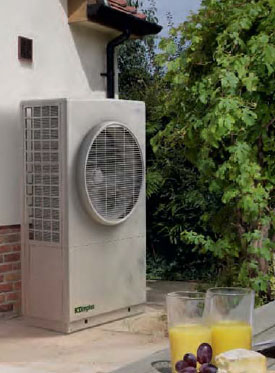
ASHPs work by harnessing the warmth from the air and channeling it into domestic hot water and heating – this unit is a Dimplex A-Class
Is it suitable for you?
This all comes down to your home’s building fabric and your household’s requirements. These pumps provide a lower temperature output than other conventional central heating systems (such as gas-fired boilers) meaning they work best in well-insulated, airtight properties. This is why they are generally more suited to new builds. “If your home gets cold really quickly then you’ve probably got the wrong dwelling for this tech,” says David.