readers’ homes
REIMAGINING THE COTTAGE
The Marshalls’ project has only added a modicum of extra space to their compact historic home, but it’s totally transformed the internal spaces for modern living
WORDS CAROLINE EDNIE
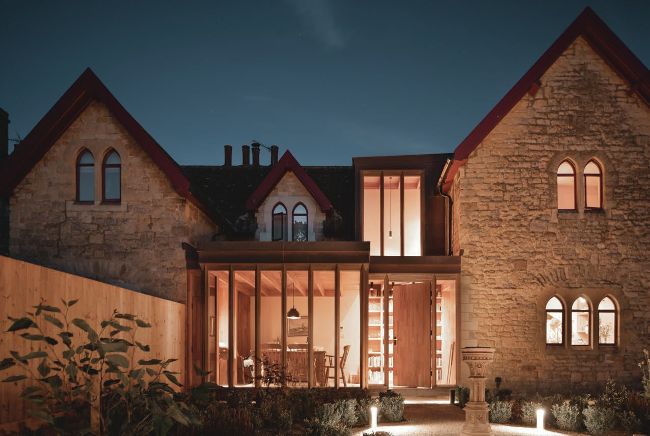
The cottage’s existing windows have been upgraded with slimline double glazing to provide improved performance while meeting listed building requirements
PHOTOS BUILDING NARRATIVES
Old Four Row in Lincolnshire may be a small house, but it has plenty of history. It was designed by preeminent Gothic Revival architect George Gilbert Scott, most famous for the Midland Grand Hotel fronting London’s St Pancras Station. It was extended in the 1970s, prior to being listed. Almost 50 years later, in the hands of new owners Pamela and Richard Marshall, it’s a sensitively restored and modernised 21st century home that pays homage to its heritage.
Close to home
Pamela and Richard had lived in the Lincoln area for the best part of 30 years before they began looking for a modest house and garden in which to enjoy retirement. “We’ve known the village for a long time,” says Pamela. “In fact, in 2007 we bought the cottage next door with a view to moving in as we got older, and we’ve been letting it ever since.” The end cottage then came up for sale in 2014, and the Marshalls jumped at the chance to purchase it. “It has a much bigger garden and we felt there was more potential to make the kind of living space we preferred,” says Pamela.
Since the utilitarian 1970s extension at the rear of the building, little work had been done to the house. So, the Marshalls asked London-based Daykin Marshall Architects – where their son Mark is a director – to look at options to update it. The brief was to make the traditional cottage fit for modern living, and to replace the unsympathetic addition with a new structure with space to dine, lounge and enjoy the garden. “As it’s a grade II listed property, there were limitations to what we could do,” explains Mark. “But the fact there had been a previous extension between the gables – just a brick lean-to infill – gave us an opportunity. We felt it would allow us to remove what’s there to make it better, and that in return they would give us some leeway with the new build.”