Design tips for wetrooms
Offering convenience and a touch of luxury, a wetroom will transform your shower into a focal feature. Emily Smith unveils how to create an attractive and functional space
Wetrooms blur the boundaries between traditional shower enclosures and bathrooms by creating a completely waterproof, barrier-free zone. If done well, the space can offer a convenient washing area for all the family, regardless of their age or abilities; but unsuccessful designs could result in drainage issues and damp problems, plus everything in the vicinity will become drenched. Here’s some insight from the experts to help you create an effective wetroom, from recognising the practical considerations through to ensuring you achieve the right aesthetic for your tastes.
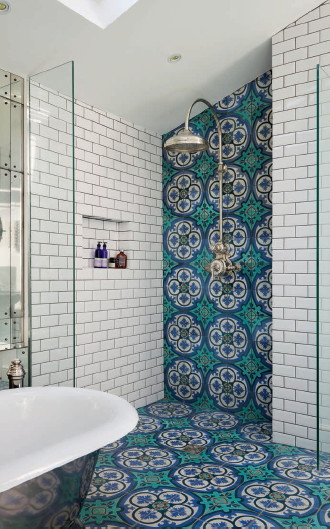
Wetrooms aren’t limited to just minimalist setups and monochrome palettes, as this bold setup by Drummonds demonstrates
1 Zoning
Think carefully about the whole space and which areas need to be kept dry. This will be easier in large open-plan bathrooms, but smaller areas will require more careful consideration. Shelves and towel rails are an obvious splash-free zone, but what about toilet rolls and beauty products around the sink, as well as somewhere to dry off? “People like the idea of a full-on wetroom, but on a practical level, we often find that they prefer a separate drying area,” says Georgina Spencer from Roca.“Incorporating a frameless shower screen and low-level tray will instantly create different sections within the room, while not detracting from the open-plan feel.”