HEAT PUMP PROS & CONS
We look at the main heat pump options, along with the key factors that will help you decide if this efficient tech suits your project
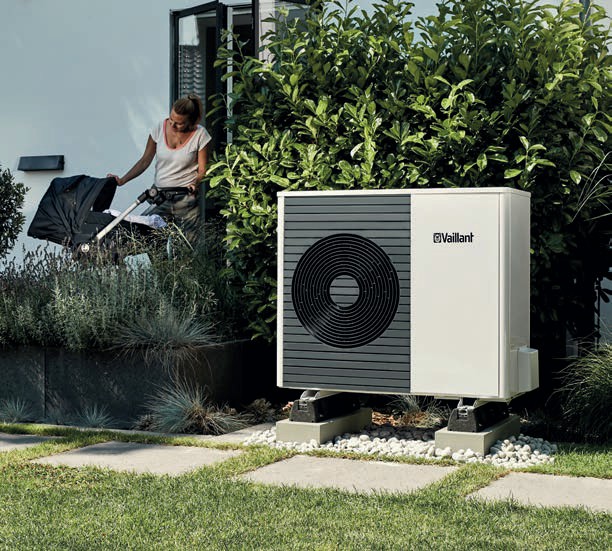
Vaillant’s aroTHERM split is a Quiet Markapproved, lownoise air source heat pump that’s available in a wide range of outputs
Heat pumps are a modern, low-carbon space heating and hot water solution. They take warmth from low-grade sources (the air, ground or water), compress it to boost temperatures, and then distribute it around the home. Crucially, heat pumps produce more energy than the electricity required to run them – making them an appealing choice for a range of projects and households.
What makes heat pumps efficient?
Heat pumps work on the same principle as a refrigerator, but in reverse. Energy is taken from the ground, air or water in a collector fluid known as a refrigerant. It’s then passed into the heat pump’s compressor, which pressurises the fluid into a gas and, in doing so, increases its temperature. This gas then passes through a heat exchanger, which extracts the warmth for use in your home’s central heating and hot water system (you’ll need a cylinder).
For each unit of electrical power used to run your heat pump, you’ll get more than one unit of heat output. The ratio of heat energy produced versus electrical energy consumed is known as the Coefficient of Performance (COP). Manufacturers generally quote a Seasonal Coefficient of Performance (SCOP) of four or more. This measure is designed to reflect performance across a whole heating season, although it is determined under lab-controlled conditions.