10 STEPS TO A SUCCESSFUL CELLAR CONVERSION
Here’s what you need to know when transforming your home’s subterranean space into a comfortable and habitable zone
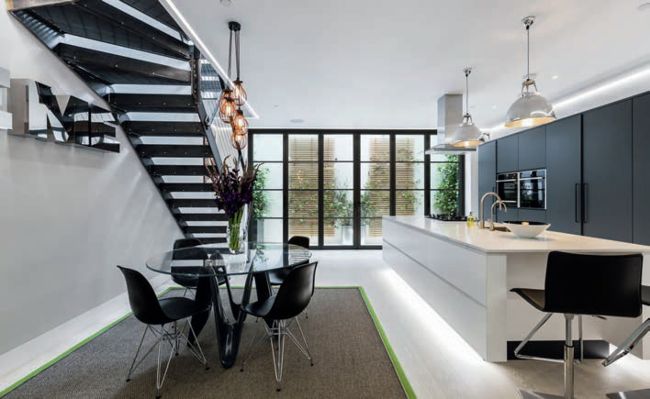
A lightwell that spans the entire width of this basement ensures the contemporary kitchen-diner is flooded with light. A staircase with open risers and an open balustrade enhances the flow of light on the subterranean level
If extending upwards into the loft or outwards into the garden isn’t an option for you, digging down may present the only viable possibility for expanding your home. Increasing the size of your property with a subterranean level can be a surprisingly cost-effective way to boost its square footage, especially if you have an existing cellar or coal chute, as much of the required excavation work will have already been done.
Cellars are a common feature in many period properties, but as they were principally designed as a storage space, transforming this dark, often cramped zone into appealing, habitable accommodation can present a few challenges. Headroom is typically one of the biggest obstacles to overcome, as you’ll want a minimum clearance of at least 2m. Additional structural works, waterproofing and insulation may also be required – not to mention that you’ll probably want to incorporate some means of bringing natural light in. Here, you can find out more about the key steps to successfully transforming your cellar into a new, liveable storey.