Guide to installing a WOODBURNING STOVE
Nigel Griffiths takes a look at the benefits of woodburners for delivering efficient space heating and hot water, and how to get your new stove installed
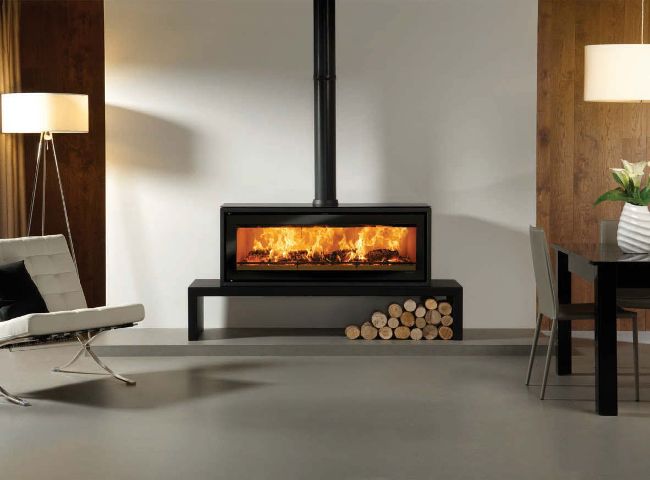
The striking, Ecodesign-ready Studio 3 (from £3,439) is the largest woodburner in Stovax’s range, offering an 11kW heat output and widescreen views of the flames. It can be hearth-mounted or seated on the optional 180 steel bench (from £509).
Wood has been used as a fuel for cooking and heating since the dawn of time - and there can be little better than enjoying the cosy, calming glow of a real fire during the colder months. These days, most of us look to a woodburning stove to achieve this. A stove is far more efficient than an open fire, as the heat can be largely retained within the building - with less of the useful warmth escaping up through the chimney. So what should you look for in a woodburner, and how can you get the specification and installation right?
Types of stove
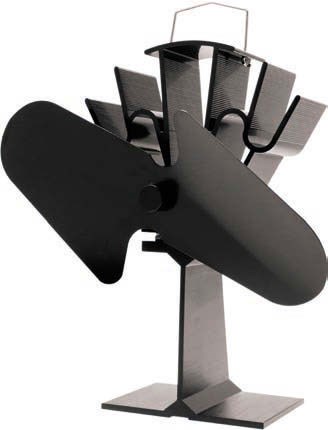
This Valiant two-blade fan, from £75 from Ludlow Stoves, gently and silently distributes air from the hot zone around the room to improve comfort and reduce fuel consumption
The simplest form of woodburner is a space heater. In other words, it’s designed to warm the room it’s located in. Your installer will look at factors such as the size of the room and amount of insulation in the building fabric to calculate the heat output required. You can then match that up with the many high-quality designs on the market.
Many homeowners choose to add a heat-powered stove fan to their installation. These are a smart idea, as they require no electricity to run. Instead, they make use of the heat differential between the base of the unit and top of the fan to drive a motor that aids heat distribution, warming up the room in a fraction of the time.
Some woodburners can also be used for cooking, potentially boosting sustainability. Whether this is viable depends on what sort of building you live in: a very small dwelling heated solely by a woodburner is an ideal candidate, for instance. The heat used in cooking is simply recycled into the indoor atmosphere after it’s past through pots/pans and their contents (although sophisticated designs can even include an oven). In larger homes, it’s unlikely you’ll want a primary source of heat to be concentrated in the kitchen - so it’s more common to use a stove solely as a space heater in a lounge or study.