DESIGNING OUT OVER HEATING
Architect Julian Owen explains how to create a home that’s warm in the winter and keeps the sun out during the summer months
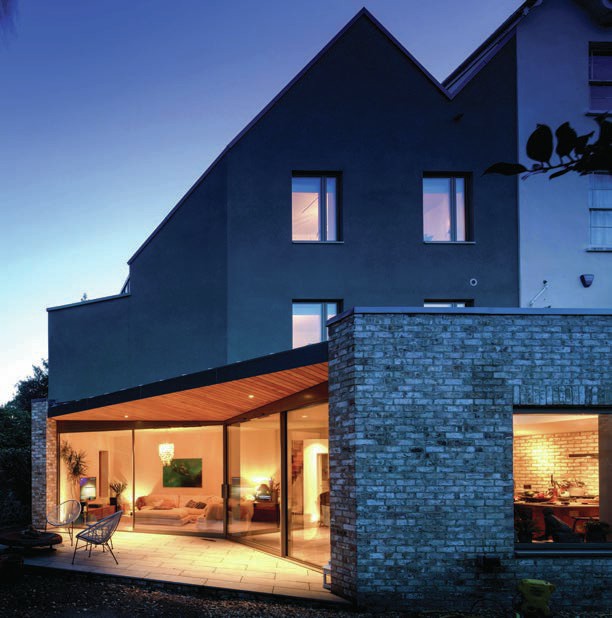
This modern extension designed by Emmett Russell Architects (www. emmettrussell.
co.uk) features a roof overhang that shelters the patio and provides ample shading for the oversized sliding door sets. That way, the inside doesn’t get too hot on sunny days
CRAIG AUCKLAND, FOTOHAUS
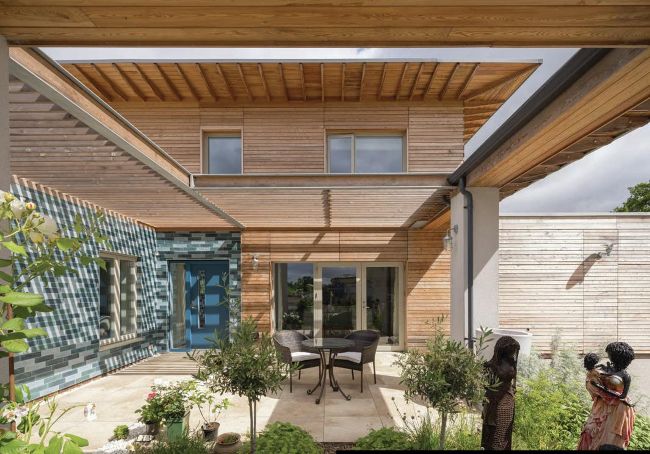
English Brothers (www. englishbrothers.
co.uk) supplied a timber frame package for this stylish modern home. It features multiple louvres and overhangs for shading, as well as a sheltered courtyard to enjoy the outdoors
MATTHEW SMITH ARCHITECTURAL PHOTOGRAPHY
Thanks to global warming, our summers are getting hotter and, in turn, so will our homes. Although basking in the scorching sun is great when you are relaxing on holiday, a heatwave is not so much fun if you are unable to sleep because your bedroom is like an oven, or you can’t concentrate because you’re sweating away working in your home office.
It is seen as such a serious problem by the government that a brand-new set of Building Regulations (Part O) was introduced in June this year to tackle overheating in all types of building. One tried and tested response to this threat is air conditioning, but that’s only feasible if you can stomach a leap in energy costs – which can be as much as 30% per annum – and carbon emissions.
A more sustainable and far cheaper way of keeping cool is to design out the risk of overheating in the first place, when houses are being built or altered. There is no single feature that will do it, but a host of different ideas can be successfully combined to make a house more comfortable during the long, hot summers to come.
Heavyweight construction