Fire safety
Ensure your project meets the standards set out in the government’s guidance with Tim Doherty’s advice

This smart smoke alarm by Netatmo sends instant smoke alert notifications to your phone, so you can be quickly informed if something happens while you are away. The device generates selfcheck reports, keeping an up-todate status on battery life and performance.
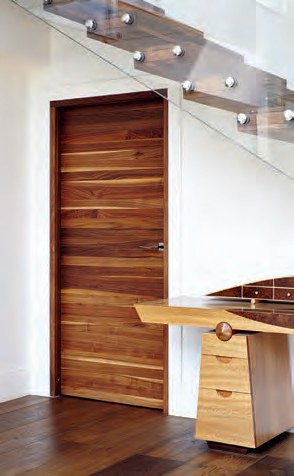
Bespoke doors by Urban Front can be made to be fire resistant with a rating of FD30 or FD60 as requested when placing the order
We’ve all been shocked by the catastrophic result of fire spreading over the cladding at Grenfell Tower. It puts a sobering perspective on how crucial it is to make your new home safe, both in terms of stopping flames from travelling too far and having a suitable means of escape in place. Here I’m taking a close look at the rules and regulations you need to follow to meet fire safety standards in your property’s design.
Following the rules
You need to have a system in place that quickly identifies a fire, alerts everyone in the house and offers easy escape routes. It’s worth noting that smoke and noxious gasses are often the initial problem and usually travel well ahead of the physical flames. The standard of fire detection and alarm needed for your house will largely depend on its size; Building Regs set out the levels accordingly.
The documentation states that a Grade D system is required for regular houses – this means you need mains powered smoke and heat detection units, interlinked with battery back-up where the unit heads can be detached from the bases.