Hidden gem
Sandra and Huw Watkins’ cleverly concealed self build home delivers open-plan living and panoramic views
WORDS SOPHIE GALE
PHOTOS CAMILLA REYNOLDS
Sandra and Huw Watkins had lived in their striking 16th century dwelling near Stroud, Gloucestershire, for 15 years before they tackled a self build scheme on the same site. “Our home, where we’d brought up our four children, was beautiful,” says Sandra. “But it wasn’t well orientated. the windows were all in the wrong direction so we couldn’t make the most of the views.” However, as well as being in a conservation area, the house was listed, which meant the couple were prevented from making big changes. Early on, an idea took seed that the pair might one day build an abode of their own design in the garden, with the principle aspect looking out onto the far-reaching vistas.
Plans into action
It was May 2007 when the couple first applied for planning permission – a process that turned out to be a slow burn. they proposed to build a three-bedroom house that would sit level with the lane, which was soundly rejected by the local authority. It would be several years before the couple revisited the project again, as life and work commitments took over. By 2012, Sandra was ready to take up the challenge.
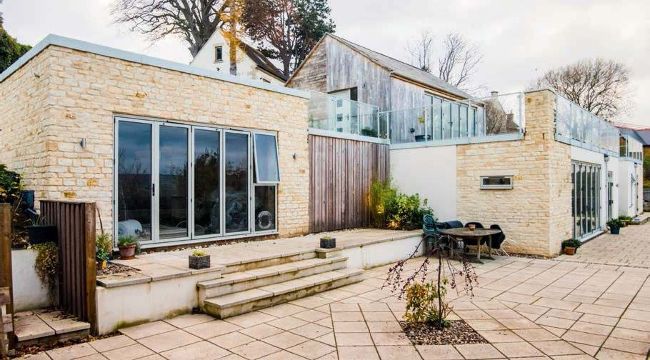
Most of the property has been built into the slope of the plot, hidden from view from the road
”The views take our breath away, while inside is uncluttered and spacious “
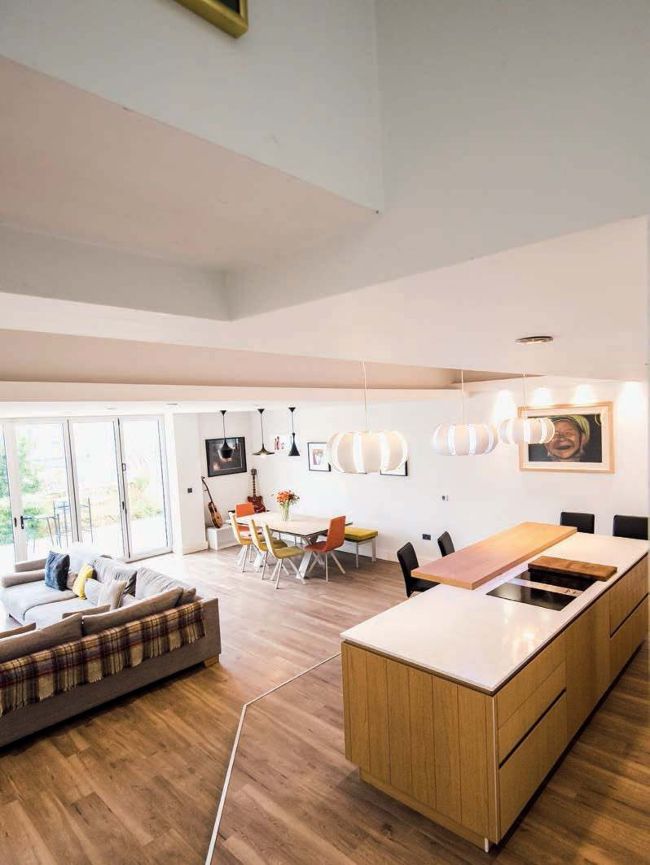
The open-plan kitchen-living-dining area is on the lower ground floor, with bifolds opening onto a large patio
Aided by architect Barrie Pierce, who has since retired, the design was revamped, with major elements taken underground. the plan was for a three-bedroom house sitting into the bank, with a substantial open-plan kitchen and living area, plus two bathrooms.
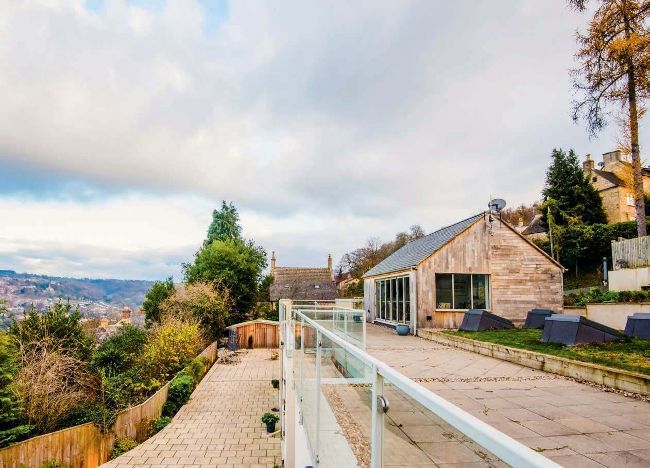
the entrance, an inconspicuous garden room with large viewing balcony, would be the only part of the property visible from the lane. A grass roof for the living space below would be at ground floor level and accommodate openable Velux windows, set on small plinths, drawing light inside. the main areas of glazing would be positioned on the front elevation of the house only, hidden from the streetscene, with small amounts to the sides. To a casual passer-by, it would seem a simple hut, surrounded by flowerbeds, was the only thing there.