STARTING from SCRATCH
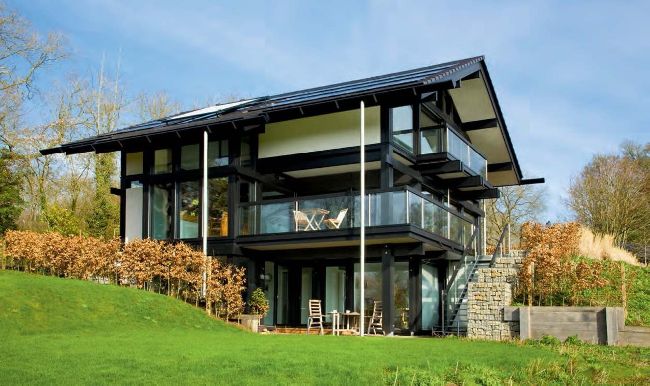
When David Miers and Monika Rese set out to build their dream home in the Kent countryside, their goal was to create a lowenergy, zero-bills property
WORDS RICHARD WEBBER
PHOTOS ALISON HAMMOND
When David Miers and his wife Monika Rese decided to return to the UK after several years living in Cologne, they set themselves an ambitious target: to build a sustainable house that wouldn’t have utility bills. While such properties are common in Germany, the couple soon discovered that they’re not so plentiful in the UK.
After a year searching for their dream eco home, which needed to offer high ceilings, plenty of light and an Energy Performance Certificate (EPC) A rating, David and Monika were forced to accept that suitable existing properties were few and far between. It was at this point they realised that they’d have to take matters into their own hands and build a house themselves.
Tracking down land
After searching for a suitable plot across South East England, David and Monika eventually discovered a site close to the village of Stelling Minnis, between Canterbury and Folkestone. The location was ideal for them, situated midway between the couple’s respective families who were living in Cologne and North Wales.
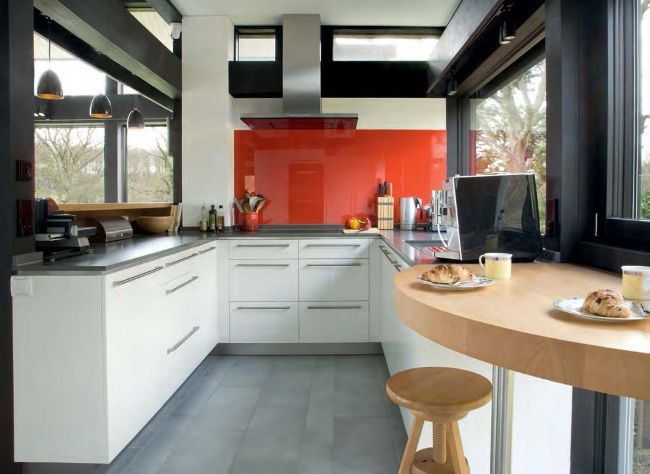
Sleek, minimal cabinetry with contemporary ironmongery enhances the culinary zone’s modern aesthetic
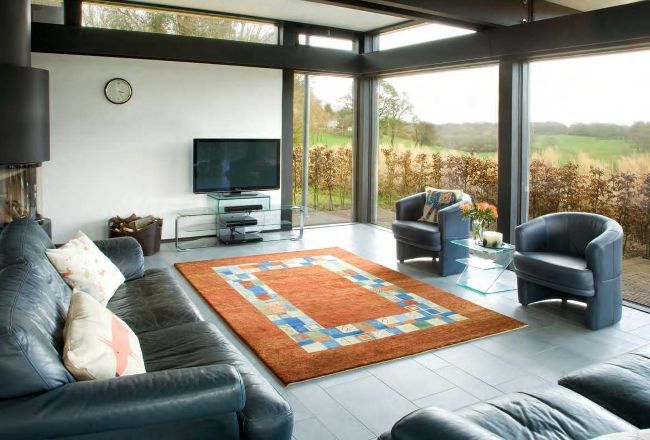
David and Monika’s new abode is situated in an AONB, and enjoys fantastic views of the surrounding Kent countryside
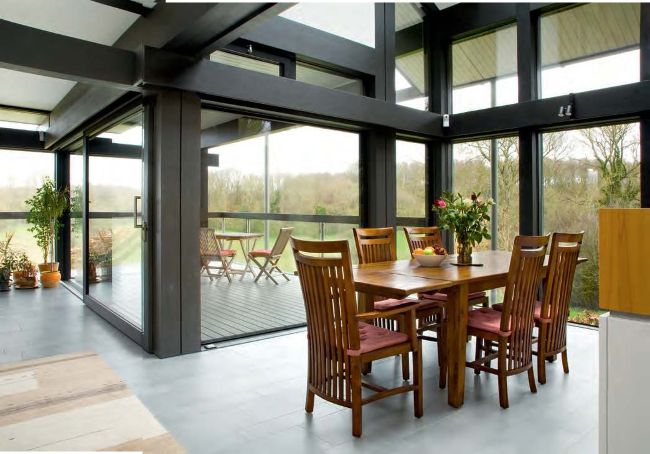
The dining room is positioned next to sliding glass doors that lead out onto an outdoor seating area
The plot already accommodated a rundown house, which the couple would demolish to make way for their new home, and fitted the bill for several reasons. Not only was it located on a quiet spot with excellent rural views, but the land was well-suited for the installation of a ground source heat pump (GSHP), too. Powered by electricity, this tech takes energy stored in the earth, concentrates it and redistributes the warmth into central heating and hot water.
The couple’s prospective plot featured a clay top layer of almost 2m, above chalk. This allowed the installation of the pipe setup in the upper strata, which was important because a chalk substrate is not as dense as cohesive soil and drains more quickly, so it doesn’t hold heat for as long (generally the advice is to double the area of collector coils in chalk, which adds to installation costs).