INSULATING a period home
Heritage properties don’t always offer the warmest living environment – but with the right approach, they can be made cosy and efficient without detracting from their character, says Alan Tierney
Alan Tierney
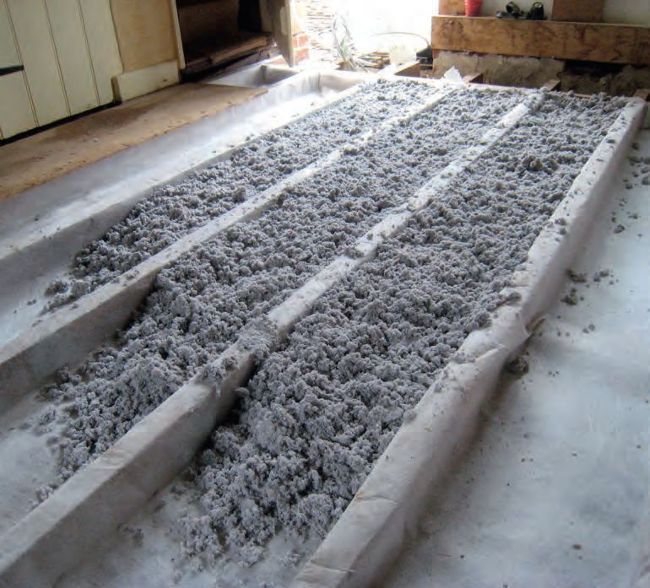
Loose fill cellulose can be poured onto a breathable membrane, in the gaps between joists, to insulate a suspended timber floor. Below left: This loft space has been treated at joist level using hemp batts – a hygroscopic, natural material. Note the eaves are clear of insulation in order to maintain good ventilation
The thermal performance of our homes is a matter of increasing importance for a number of reasons, in particular managing CO2 emissions, fuel costs, health and comfort. For different people, living in different types of property, the ideal balance between these priorities will vary – but all will need to be considered when developing an effective strategy to make improvements.
Another factor that must be taken into account is the health and condition of the building itself. For a heritage home this element is of particular importance, partly because of the need to protect its inherent cultural value and character. But this is also due to the fact old buildings are complex environments, sensitive to changes that may have serious unintended consequences.
How old buildings work
Before undertaking any measures that will have an effect on the functional performance of a period house, it is essential to understand how the structure’s fabric works.