Designing for EXPOSED locations
A house that’s durable and low-maintenance is high up on the wish list for most selfbuilders, but could your site’s climate be an obstacle? Julian Owen takes a look at how to plan for extreme conditions
Julian Owen
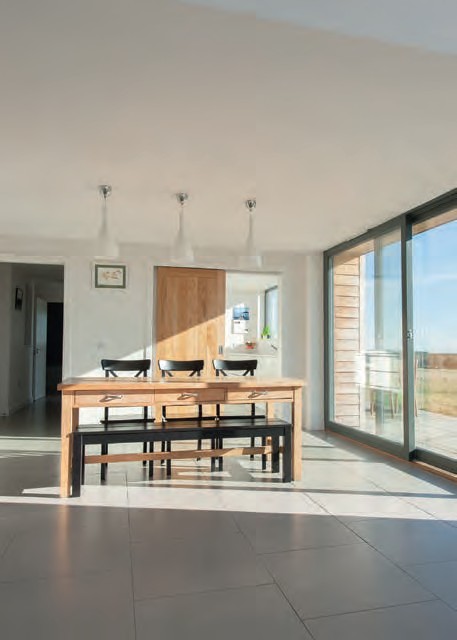
MARGARET SORAYA
Keith and Rachel Chandler self-built in a rural area to the north of Inverness, surrounded by farmland. The single-storey, low-lying property sits neatly in the exposed site. The couple are particularly thrilled with the uninterrupted views enjoyed from inside their home
By world standards British weather is fairly benign; we certainly don’t need to build to withstand arctic blizzards, Caribbean hurricanes or desert heat waves. But as any geologist will tell you, even mild conditions can erode the hardest of rocks down to dust – all that’s needed is time. This means that the outside surfaces, joints and other weak spots of any building are continually degraded, and this happens more quickly in exposed locations. By this I mean sites that don’t have as much shelter as houses surrounded by woodland or other buildings – I’m talking coastlines, plains and hills that suffer from forceful driving wind and rain.
Regardless of the materials that make up a house, successful defence against exposure is often down to how it’s constructed. With this in mind, there are plenty of lessons to be learned from heritage buildings – none of the much-admired features of rural areas and seaside towns are there by chance. Many of the effective practical measures that were traditionally used are still relevant today. This includes roofs with steep pitches to prevent snow build up and reduce the risk of the wind catching the tiles; large overhangs to protect the tops of the walls; and small windows with deep reveals to shelter the gap between the wall and frame from water ingress. We’ll look at traditional building techniques in more depth later.