real-life builds
GETTING GLAZED LINKS RIGHT
PROJECT INSPIR ATION
A glass link building can help bridge the gap between old and new (or two separate volumes) to create a connection that adds space, light and a dash of architectural flair, says Emily Brooks. Here, we take you through how to get this feature right and introduce you to some stunning real-life project success stories
Case study Joined Up Thinking p48
Case study The Forever Home p51
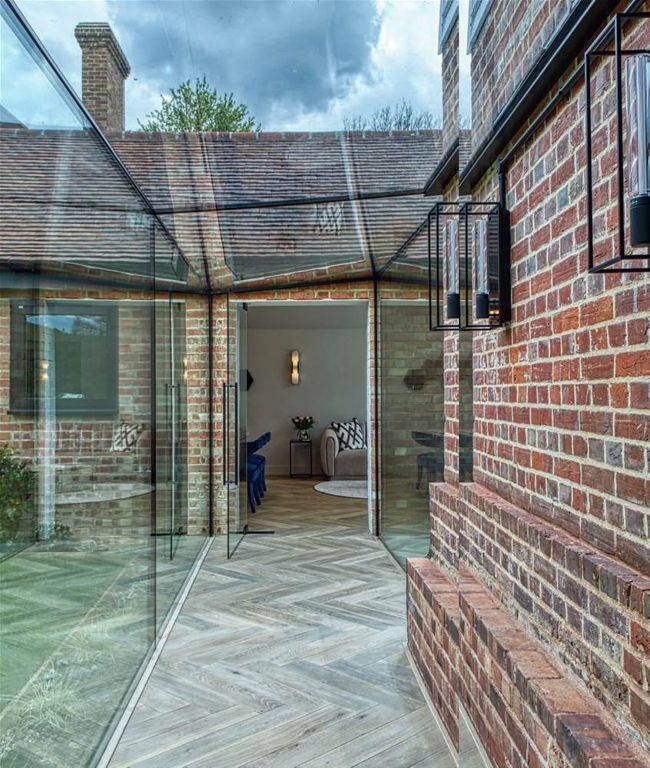
In this Kent project by IQ Glass, a frameless glazed link connects the original red-brick house with a new brick extension, and there is a nearinvisible slim-framed pivoting glass door on the threshold to the new kitchen-diner space. The same herringbone flooring is used throughout the building, including through the link, for a sense of continuity
A glass link can be a very useful tool in an architect’s toolbox. Whether the structure is connecting an older property with an outbuilding, an extension with an existing property, or even being used to add some visual punctuation to a new build, it will deliver impact and wow factor, despite being elegantly frameless and airy-looking.
“Creating a minimally framed glass link is reasonably complex and relatively costly – but executed well can enhance the extension of a period building and also add a moment of delight,” says architect Mark Stewart of Stewart & Stewart Design. So, how do you plan and successfully deliver such a project?
Useful applications
“We like to use glass links on projects that require an extension to a listed building,” says Hampshire-based architect Adam Knibb. “They can offer a light touch connection to the existing historic fabric, and provide minimal points of contact and intervention where the glazing is fixed to the existing building. These links also provide a physical break from the original architecture and allow a clear distinction between old and new”. This is an approach that council planners and conservation officers tend to like.