Birds of prey with Paul Way
Red kite rendezvous
Wildlife photographer Paul Way loves to focus on this majestic bird of prey. Niall Hampton joins him for feeding time at Gigrin Farm’s Red Kite Feeding Centre

Paul Way
Photographer
Specialising in wildlife and landscape photography, Paul Way has been taking photos for 30 years. He’s a leader in the field of red kite photography, with over 150,000 images of this bird of prey in his photo archive.
www.p23way-photos.com
Instagram: @p23way_photos
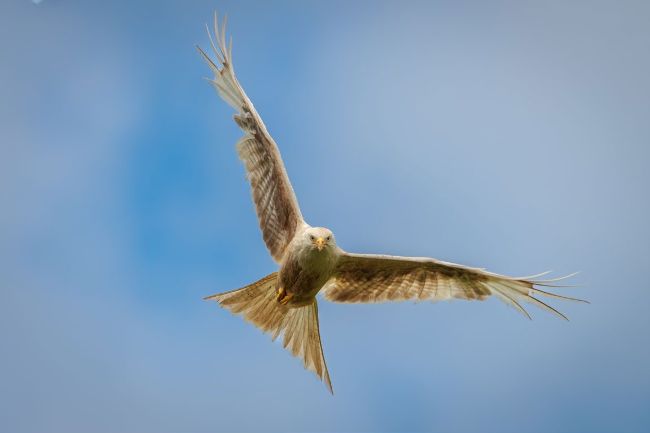
When the opportunity arose to join the leading wildlife photographer Paul Way for red kites feeding time at Gigrin Farm in Wales, I didn’t envisage the sheer number of birds that would appear. My previous experiences of bird reserves tended to involve patient waits for species that might turn up, in small numbers, and only for a fleeting time. But Gigrin Farm is a different matter entirely. I’d love to be able to avoid the trap of making references to scenes reminiscent of Alfred Hitchcock’s classic thriller The Birds, but standing in the hide at Gigrin Farm, this did cross my mind – albeit I don’t recall any birds of prey in the 1963 film, and humans aren’t under attack today. Quite the opposite: if you want to get close to hundreds of red kites one afternoon, then Gigrin Farm in Rhayader is somewhere you need to visit.
Photo workshops at Gigrin Farm
Join Paul Way for a masterclass in capturing the majesty of this awesome bird of prey. You’ll take your position in the 20ft-tall Big Tower Hide, where up to 600 red kites can gather to feed on beef bits scattered in the meadow below. It’s a frenzy of activity, with every bird for itself, and they’ll be flying around you just a few metres away. Workshops cost £75 ($95) per person and you’ll need to bring a DSLR or mirrorless camera and a lens with a 300-500mm focal length, a wide-angle optic, spare batteries and memory cards. gigrin.co.uk/photo-workshops
About the Red Kite Feeding Centre Gigrin Farm is an upland sheep farm in Powys, mid-Wales. The Red Kite Feeding Centre was established in 1992 following a request from the Royal Society for the Protection of Birds; the farm’s late owner had started feeding half a dozen of the birds roosting on the farm – now up to 600 are fed each day during the winter. gigrin.co.uk