BLACKWATER DIVER
DIVING THE NIGHTSHIFT
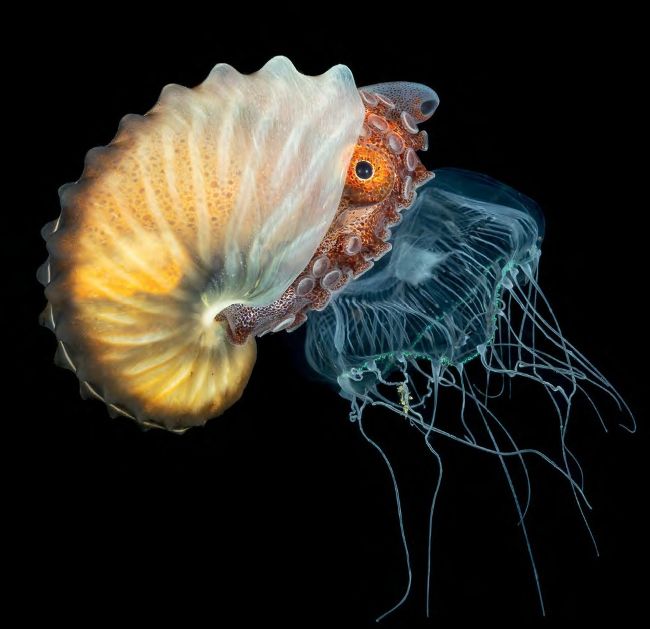
Paper nautilus on a jellyfish, Anilao.
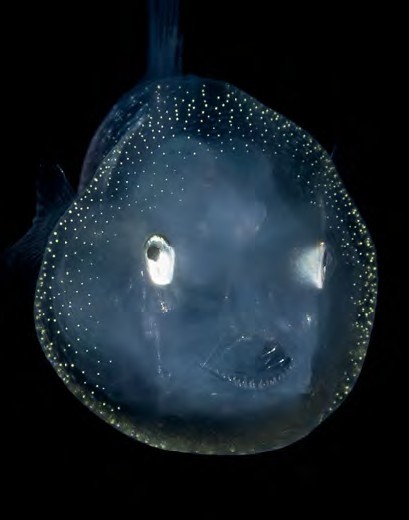
Larval deep-sea anglerfish, Lembeh.
Prepare yourself for blackwater - it’s the hottest game around, says ALEX TYRRELL
IT’S THE LATEST CRAZE. Everybody is talking about it. Blackwater really is the new kid in town!
Photo competitions are being won by unique blackwater subjects, and now specific blackwater categories are being introduced to cater for this growing trend. If you haven’t done a blackwater dive yet, why the heck not?
Originating from Japan, but brought into the mainstream by the Pelagic Magic dive in Kona, Hawaii, blackwater has now spread across the globe, infecting thrill-seeking divers.
With sunset cocktails forfeited, they are now doing what many would consider crazy - dropping into pitch-black open water with the bottom many hundreds of metres below, in search of new and fascinating subjects.
The hunt is then on for marine life that is rarely encountered on a standard dive - deepwater creatures migrating vertically to the shallows for feeding, as well as larval and postlarval stages of more familiar subjects that will eventually live on the reef after completing this pelagic phase of their life-cycle.
How It’s Done
The principle of a blackwater dive is fairly simple - you drift in deep, open water at night.
However, dropping divers into such a situation raises obvious safety concerns, so some dedicated equipment is required to keep everyone in the same vicinity for the duration of the dive.
Some operations tether the divers to lines attached to the boat to ensure that nobody drifts away. But this imposes some restrictions, especially for photographers.
If the subject swims or drifts further out than the length of the tether, you’ll end up being held back, like a dog on a leash!