REALITY CHECK
Mega-buildings are now slowing Earth’s spin. Here’s what that means for the planet
REVIEW
A huge dam in China is changing how long our days are
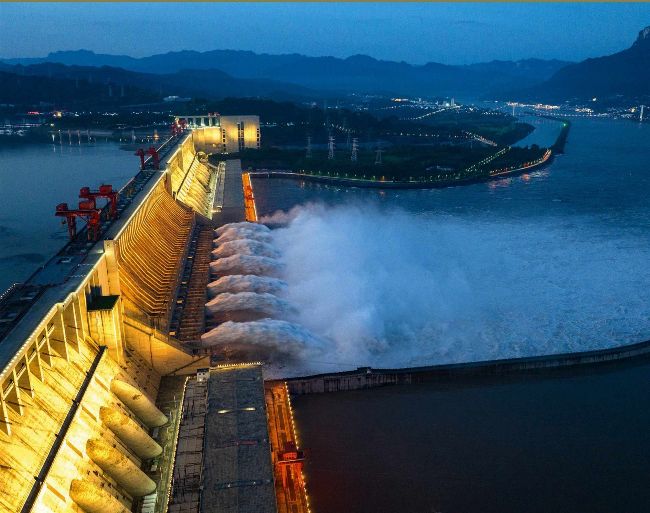
LEFT
China’s Three Gorges Dam can hold 40 billion cubic metres of water
THE SCIENCE BEHIND THE HEADLINES
Our ancient ancestors divided their lives into days, following the natural rhythm of the rising and setting Sun. This system worked well for millennia but by the 20th century, scientists made a big discovery: Earth is actually a terrible timekeeper. Why? It turns out that no two rotations – no two days – are ever exactly the same length.
There are many factors that can affect Earth’s spin, including earthquakes. The 2011 ’quake in Japan – the one that triggered the Fukushima nuclear accident – sped up Earth’s rotation by 1.8 millionths of a second.
The Moon’s gravity also contributes to all of this. It tries to hold our oceans in place, but Earth continues to turn beneath them regardless. This tidal friction robs the Earth of a little rotational energy, meaning the day is getting longer by about two-thousandths of a second (2 milliseconds) per century.
Slowing may be the long-term trend, but there have been short-term records in the other direction. For instance, 29 June 2022 was the shortest day ever recorded, at 1.59 milliseconds faster than average, beating the previous record set in 2020. This has been put down to changes deep within Earth’s core.