FROM LOG-BOOK TO E-BOOK The farm diary of Thomas Graham Bonar of Greigston
Marie Robinson uncovers the fascinating story of a log book kept by one Fife farmer in the 1820s and 1830s, an invaluable source of information about life on a 19th-century farm which has recently been published in electronic form
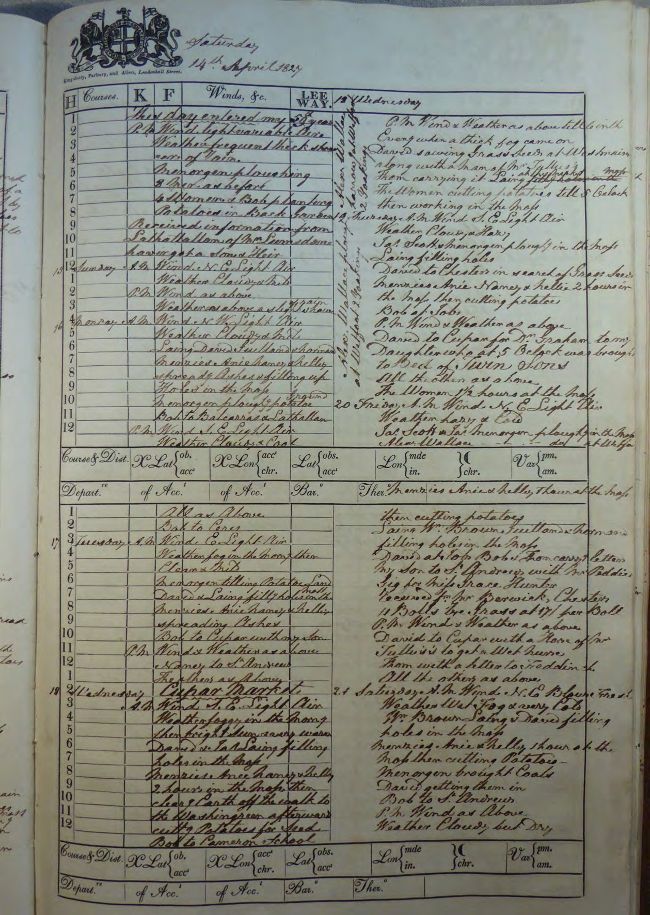
Photograph of a page from the Greigston diary, 14 - 21 April 1827
Farming in the 19th century
The e-book of the title is the story of a diary – in both senses. It comprises the transcript of this pre-Victorian farm diary, and an introduction aimed at setting the journal into its context of place and time. The diary is owned by Mr and Mrs Tom Grant, who farm Greigston today. It is a record of practices and procedures on the farm, but also offers glimpses of family joys and sorrows, the social networks and the wider issues of the time – from agricultural improvement to a cholera epidemic. In this article I will briefly describe what sort of things the diary tells us, focusing on the entries on the illustrated page (figure 1) opposite as examples.
The diary was kept from September 1824 until December 1833 by Thomas Graham Bonar, a landowner in east Fife (figure 2). Twice each day for over nine years he recorded what was happening on his farm, part of Greigston estate near Peat Inn, five miles south-east of Cupar. He noted what visitors came and any social calls made, and what the weather was like. During this period agricultural improvements were continuing at Greigston as a peat moss was drained and brought into cultivation, trees were planted and new implements used – iron ploughs, a turnip barrow, a cradle scythe. The period covered by the diary saw the cholera epidemic and the Reform Acts of 1832.
Greigston was an entailed estate, as many in Scotland were at that time. The laird’s name, Graham Bonar, was inherited by the children in each succeeding generation. In the absence of a male heir of entail or tailzie, the name was appended to the surname of a married daughter, her husband then becoming laird. Two gravestones at St Andrews Cathedral graveyard relate to some of the diarist’s family (previous and subsequent generations), though Thomas Graham Bonar and his wife Mary and son William were buried in Cameron Parish kirkyard (figures 3 & 4). The diary and many other family and estate documents were handed down until Greigston was sold in 1919, five years after the practice of entail became incompetent. The family who would have been next in line to inherit the estate (a daughter of Frank and Margaret Graham Bonar commemorated on the marble cross gravestone shown in the illustration) took the archive to Malaysia. After returning to England, it found a home in South Africa, then in the 1980s it was brought back to Fife by the late Peter Bridges, great-great-greatgrandson of Thomas the diarist.
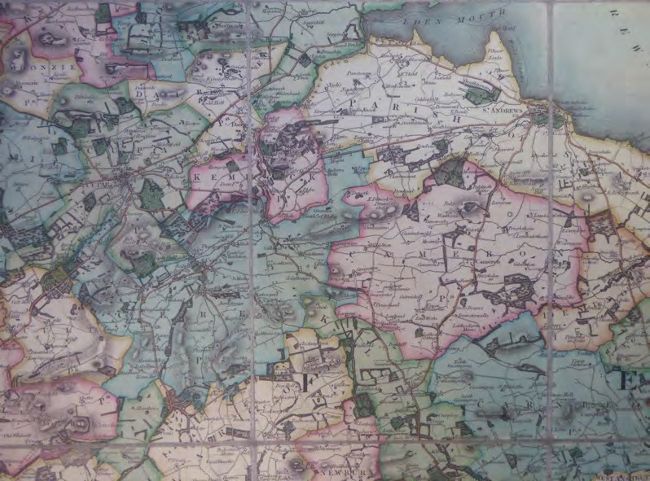
Excerpt of the Map of Fife and Kinross by T. Sharp, C. Greenwood and W. Fowler, 1828, London. Greigston is near the western boundary of Cameron parish (centre/right of map)
Family and neighbours
The facing illustration of a page of the diary that covers the period between 14 and 21 April 1827 is somewhat atypical in that several birthdays fell during the week. First of all, the diarist notes his own 59th birthday; then a son and heir was born to friends at nearby Lathallan, home of the Lumsdaine family; and more importantly, later the same week the diarist’s daughter, Mrs Cowan, was ‘brought to Bed of Twin Sons’. Mrs Margaret Cowan (figure 5) continued to live at Greigston after her marriage, and the births there of her five children were recorded in the diary. Her husband, Henry, worked in the service of the Honourable East India Company (HEIC). The farm diary itself is a ship’s log-book intended for use on an East Indiaman – note the HEIC crest at the top of the page – and in all probability Henry Cowan senior gave it to his father-in-law to keep a daily record, in order to help him later to fill in the lengthy gaps when he was at sea.