BRAIN DUMP
Because enquiring minds need to know…
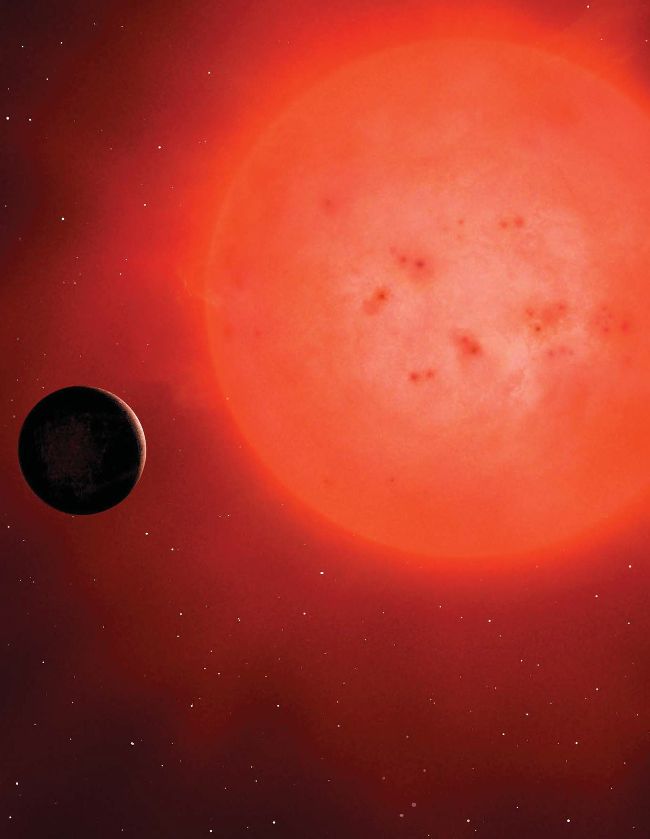
Proxima Centauri is a red dwarf star and is smaller than our Sun
Getty
Want answers??
Send your questions to…
How It Works magazine
@HowItWorksmag
howitworks@ futurenet.com
How long would it take to get to the next planetary system?
Yob Fashipe
■ A long time! Alpha Centauri is the closest star system to us, and is made up of three stars: Alpha Centauri A and B and Proxima Centauri. The closest of these three to the Sun is Proxima Centauri, which is confirmed to host at least one exoplanet. Even though it’s the Sun’s closest neighbour, it is still 4.22 light years away - that’s about 39.9 trillion kilometres. With current technology this great distance would take generations to traverse. However, if humans are able to develop light-speed travel in the future, we could reach Proxima Centauri in just over four years.
NR
DID YOU KNOW??
NASA spacecraft Voyager 1 and 2 have both reached interstellar space
Why does the speed of sound differ through different mediums?
Laila Jones
■ Because water, for example, is much more dense than air, allowing the wave to travel quicker through it. The density of the medium through which sound is travelling will affect the speed of the sound wave. Sound typically travels faster through a solid than a liquid, and slower through a gas. For example, through room-temperature air sound travels at around 343 metres per second. Through water, however, sound travels much faster at about 1,480 metres per second.