WHY SUPER GLUE IS SO STICKY
Discover the chemistry behind the powerful adhesive that helps fix household mistakes
WORDS SCOTT DUTFIELD
A single cyanoacrylate molecule
DID YOU KNOW?
Super glue was an accidental discovery
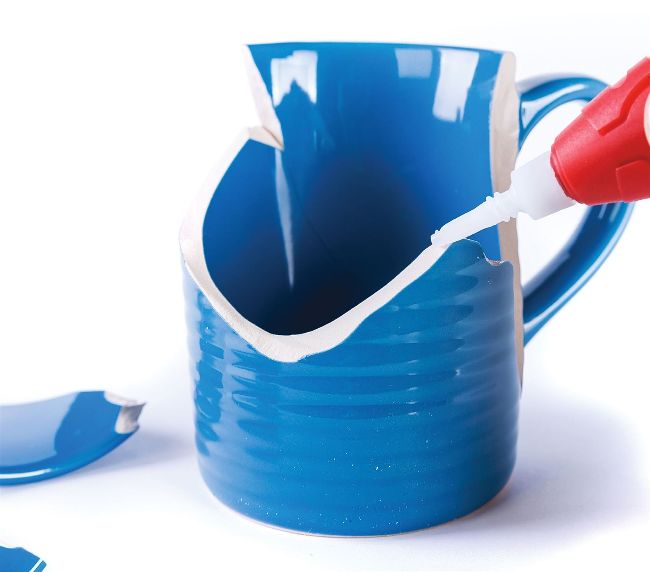
If you’ve ever dropped a ceramic vase or chipped a teacup, you’ll know the restorative powers of super glue. This adhesive is made from cyanoacrylate, an acrylic resin that bonds to a surface, otherwise known as ‘curing’. Many other glue types, such as PVA glue, form these bonds through evaporation drying. As the glue dries and the water is lost, the remaining polyvinyl acetate (PVA) latex forms bonds between two surfaces. Super glue, on the other hand, needs water to form bonds. Luckily, the amount of water it needs to cure is so minute that it’s found on pretty much every surface thanks to air humidity. When water vapour comes into contact with cyanoacrylate, the pair join forces to create a webbing of long cyanoacrylate polymer chains. These chains are difficult to break apart, but not impossible.