Assassin’s Creed Valhalla
A huge open world that offers runes with a view

Sailing missions are a large part of the game, your longboat a nimble coastal raider.
© UBISOFT MONTREAL
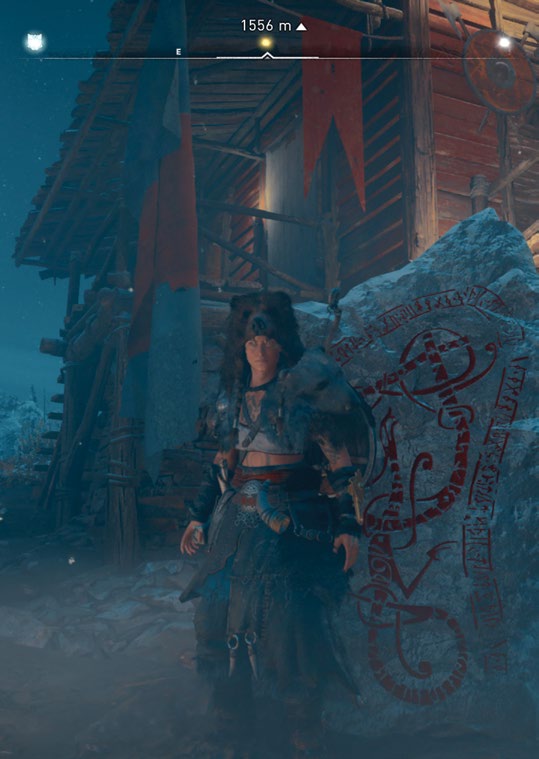
Settlements are everywhere.
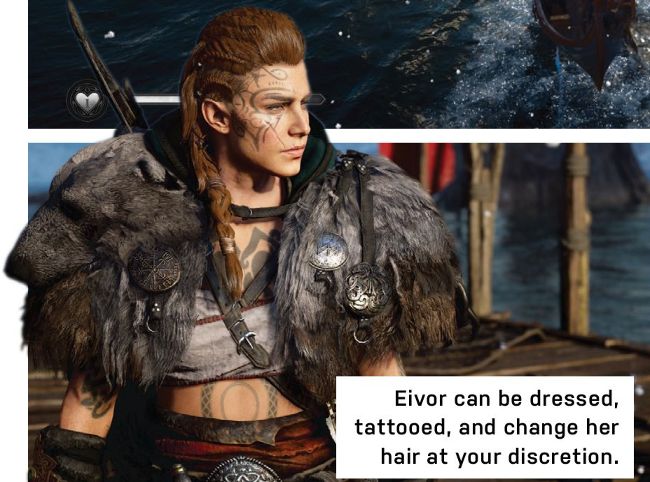
Eivor can be dressed, tattooed, and change her hair at your discretion.
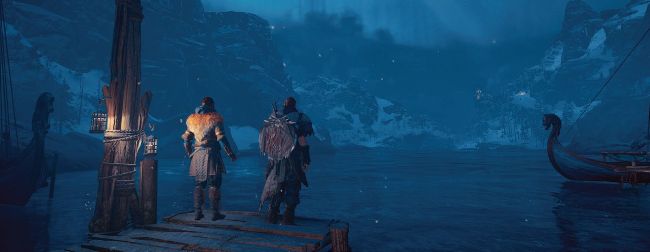
They’re a pensive folk, given to staring out over the sea.
ACTION ROLE-PLAYING
THE THING ABOUT Assassin’s Creed games these days is not so much what changes between releases, but what stays the same. Odyssey followed a very similar path as Origins, the series’s rebirth into a curious action-stealth-RPG hybrid, but Valhalla takes the opportunity to shake things up a little, mixing it with an evocative new setting (and acting as a launch title for the powerful new consoles) to great effect.
That said, it’s still an open-world Ubisoft game, which means, well, not quite what it used to. You can choose before you start playing whether to keep the constant nag of map icons trying to drag you off to find a stash of silver coins or a strange character to do a job for, or whether to explore the lands yourself, stumbling upon side quests in a more natural way. Even if you choose the former, the icons often fade away as you get really close to your target, forcing you to explore to find what you’re looking for. Origins’ and Odyssey’s character levelling is gone, meaning NPCs don’t wander around with a number floating over their heads. Your Power level is what defines you now, determined as much by your weapons and armor as the skill points you’ve spent. Enemies whose Power is far above yours are marked with a red skull, so you know not to start a fight you can’t win.