a mighty good road
Van Morrison has swapped Covid grumbling for freight trains rumbling, revisiting the UK skiffle boom that gave him his start. And who better to accompany him on his journey through the punk of its day than skiffle scholar Billy Bragg ? “Soon as I heard Rock Island Line I immediately identified with it,” Van tells him. “It was like Lonnie Donegan just opened this door.” Portraits by Tom Sheehan.
VAN MORRISON SMILES. THE PROSPECT of being interviewed by a fellow artist seems to put him at ease. When I comment on how odd the situation feels to me, he says that he prefers interviewing to being interviewed. If we can get through this sharpish, I tell him, we can turn the tables and he can interview me. “Oh no,” he laughs. “I don’t have any questions ready!”
We’re meeting today to discuss Morrison’s new album, Moving On Skiffle, in which Van returns to the songs that first inspired him to make music. Born in 1945 in east Belfast, he grew up in the shadow of World War 2. Until 1954, he wasn’t able to go into a sweet shop and choose whatever he wanted. Sugar, like clothing and petrol and most foodstuffs, was subject to rationing. That same year, Lonnie Donegan recorded a version of Rock Island Line – awell-travelled American folk song recorded in 1934 by Lead Belly – as a filler track for an album of trad jazz recorded by the Chris Barber Jazz Band.
Unlikely as it may seem now, trad jazz was the hip music of post-war Britain. Appalled by the commercialism of the big bands that had dominated the 1940s, devotees sought out rare records made 20 years before by African-American musicians, most of whom were based in New Orleans. This was a rough-and-ready music from the bars and bordellos of Storyville and in the hands of the willing amateur players in the UK, it became rougher still.
Trad was a back-to-basics movement and its British adherents sought to reach even further back by adding blues songs to their repertoire. Most trad bands featured a ‘breakdown session’ in their set, when the musicians would swap their brass and wind instruments for guitars to sing the songs of Lead Belly. It was a watershed in British pop, the moment when the guitar, hitherto a part of the rhythm section, moved from the shadows at the back of the stage to take control front and centre.
When Bill Haley’s Rock Around The Clock topped the UK charts for the whole of December 1955, Decca took a punt on Donegan’s filler track from the Barber Tom Sheehan album, releasing it as a single to cash in on the craze for ‘rock’ records. Rock Island Line leapt into the charts and within a year, music stores in Britain were selling 100 guitars a week. This was the height of the skiffle craze. Every sentient schoolboy in the country was learning to master the guitar and forming a band.
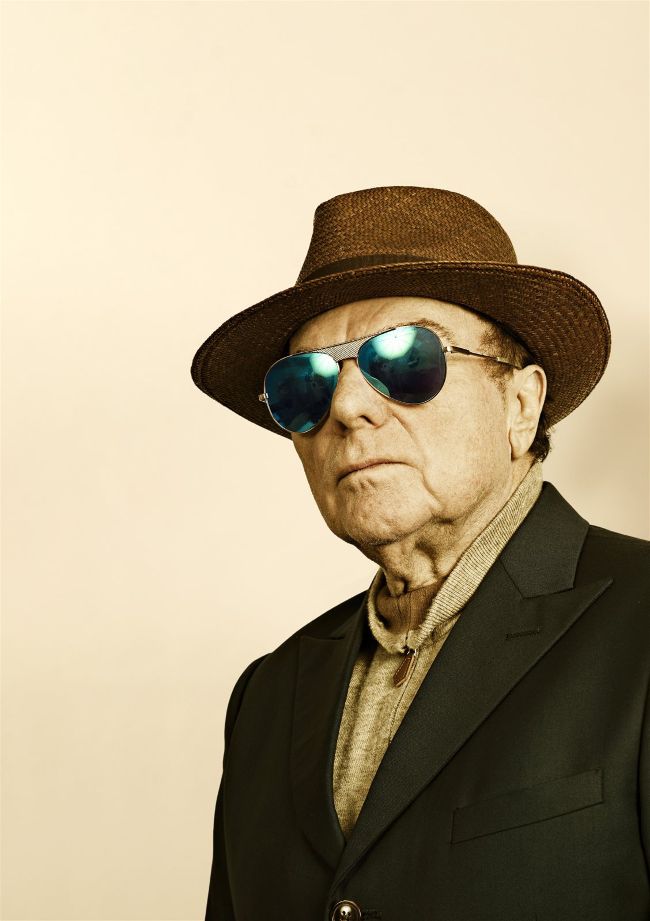
Going head to head: skiffle aficionados (left) Billy Bragg and Van Morrison discuss the “nursery for the British Invasion”, London, January 9, 2023; (below, far left) Van’s new LP and inspirations.