Mad Not Mad
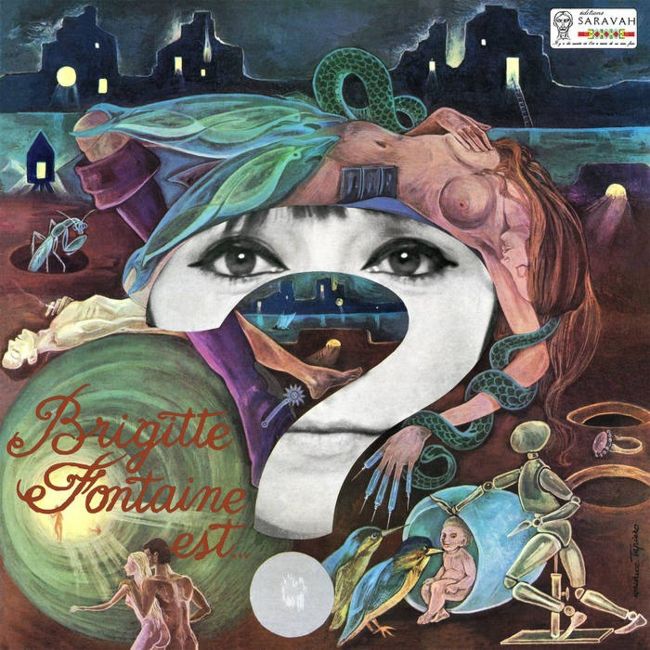
NOT JUST THE MOST ORIGINAL VOICE IN FRENCH POP, Brigitte Fontaine IS ONE OF THE MOST INVENTIVE CREATORS IN ALL POST-WAR MUSIC. JUST ASK SONIC YOUTH, STEREOLAB AND GRACE JONES. A LUXE REISSUE OF HER KEY ALBUM, BRIGITTE FONTAINE EST... FOLLE RENEWS HER CLAIM AND BEGS THE QUESTION: WHY WON'T FRANCE EMBRACE HER? "THEY'LL ALWAYS THINK I'M CRAZY,"
SHE TELLS Andrew Male
© Ned Burgess/Brigitte Fontaine Collection
IT IS A HOT SUMMER’S DAY IN THE COURT-yard of Les Récollets, a former Franciscan convent turned artists’ residence nestled in Paris’s 10th arrondissement, between Gare de l’Est station and the Canal Saint Martin. Sitting under a grey garden parasol, cradling a voluminous silver handbag, her eyes hidden behind a pair of gold human-fly sunglasses, Brigitte Fontaine lights the first of many Craven A cigarettes and inhales deeply.
“Je veux des orchidées,” growls the 86-year-old singer. “I want orchids.” It is both a riddle and a languid welcome to this writer, a non-French speaker, who is interviewing Fontaine with the help of her French biographer and interpreter, Benoît Mouchart. The reference, I quickly guess, is to the 1939 novel, No Orchids For Miss Blandish, written by an English author, James Hadley Chase, in the brutal style of US hardboiled thrillers and then re-translated into French in 1948 as part of the Série Noire imprint, books marinaded in the argot of Céline and Apollinaire and the street-slang of post-war France; books that would prove to be a huge influence on the young Brigitte Fontaine.
So, with those four words, Fontaine has commented on our language barrier, given me a clue to crack, and offered an entry point to the interview: her influences and her childhood. If that interpretation feels like a submission to Pseud’s Corner in Private Eye you just aren’t familiar enough with the way Brigitte Fontaine’s mind works.
“Série Noire?” I ask. She laughs. “Where were you born?”
Liverpool, I say.
“Lys-lys-pool,” she replies. “Lilly-Pool.” I’m lilies, she is orchids. Now we can begin.
FOR THE PAST 60 YEARS, BRIGITTE FONTAINE has been both revered and undervalued. An absurdist poet and visionary songwriter, she has, with albums such as 1968’s Brigitte Fontaine Est… Folle, 1969’s Comme À La Radio, 1973’s L’Incendie, 1995’s Genre Humain and 2009’s Prohibition as well as five plays and
around 20 books, secured a place for herself as a uniquely insolent idealist, a macabre cartographer of the human soul, writing songs of wit, anger, rebellion, alienation and provocation. To call her the female Serge Gainsbourg is both legitimate and inaccurate. Legitimate because she is more than his equal as a lyrical genius, inaccurate because Fontaine’s wordplay, allusion and alliteration is so much more violent and visceral than Gainsbourg’s, pulled from the fragile, vulnerable self rather than intellectually conjured as a game, an escapade.