REAL GONE
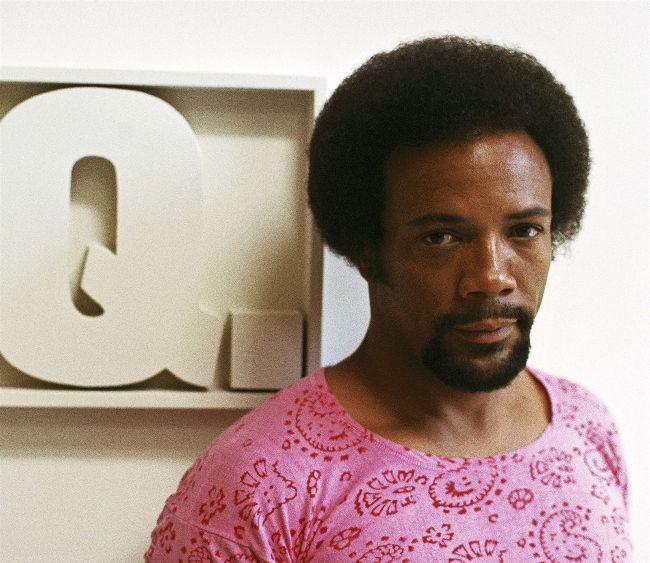
Right on Q: Quincy Jones, who “put together some of the most exuberantly swinging music ever made”, in 1972.
Jim McCrary/Redferns/Getty
The Dude
An all round force of musical nature, we lost Quincy Jones on November 3.
WHEN A YOUNG jazz trumpeter, bandleader, arranger and studio producer named Quincy Jones met his musical idol Igor Stravinsky in the late ’50s, it didn’t go well. “He liked ragtime but was very withdrawn and gave the impression we were totally wasting his time,” the legend universally abbreviated to ‘Q’ recalled to me over a convivial lunch in 1991. “When I told him what I was doing he chuckled and I felt stupid, like I should have told him I was trying to write Firebird Junior!”
Though Q may well have had subsequent occasion to feel stupid – having nearly died of a brain aneurysm aged 41, he nearly died again when he ignored doctor’s orders never again to pick up the trumpet – one doubts he ever again failed to charm a musician or, indeed, anyone else.
Aptly middle-named Delight, Quincy Jones was born in Chicago on March 14, 1933, to a mother with severe mental health problems and a carpenter father whose occupation eventually moved the family to Seattle. Jones learned survival skills and self-reliance very young, serendipitously discovering music aged 11; within five years he’d connected with his trumpet mentor Clark Terry, bandleaders Bumps Blackwell, Count Basie and Lionel Hampton, and in Ray Charles found a lifelong friend.
“The best way to deal with great sounds is to find out how everybody makes them.”
QUINCY JONES
Networking would be a pattern in life. A voracious student – “I really love great sounds,” he mused, “and the best way to deal with great sounds is to find out how everybody makes them” – Jones realised young that, the technicalities of orchestration and arrangement aside, the key to musical chemistry was human chemistry.
Surely no one has ever had so stellar a contacts book, stretching across musical genres into movies, TV, literature, even the White House. As big bands dwindled, Jones adapted fast, mastering teen pop (he produced Lesley Gore’s Number 1 It’s My Party), bossa nova and numerous screen soundtracks, a highlight being In The Heat Of The Night’s title theme sung by Ray Charles.
An insightful and passionate battler against racism, Jones broke through industry barriers, en route founding Qwest and other entertainment companies. With Ol’ Blue Eyes, Brother Ray, Basie, Nat, Ella, Chaka, Dinah Washington, Sarah Vaughan, Donna Summer and more, Jones put together some of the most exuberantly swinging music ever made, peaking commercially on Michael Jackson’s all-time bestseller Thriller, but perhaps artistically on its 1979 predecessor Off The Wall.
“As a producer, I go in the studio and every track you cut is like an X-ray,” he explained. “You can hear everything that’s happening because I’ve paid my dues with the best music ever written, from Duke Ellington and Gil Evans to Penderecki, Lutosławski and Stockhausen, all the elements and voicings. I put that homework in. If you’re grounded, it takes away fear. There’s nothing in pop music like Charlie Parker where I’d go, What the fuck is he doing?!”
Mat Snow
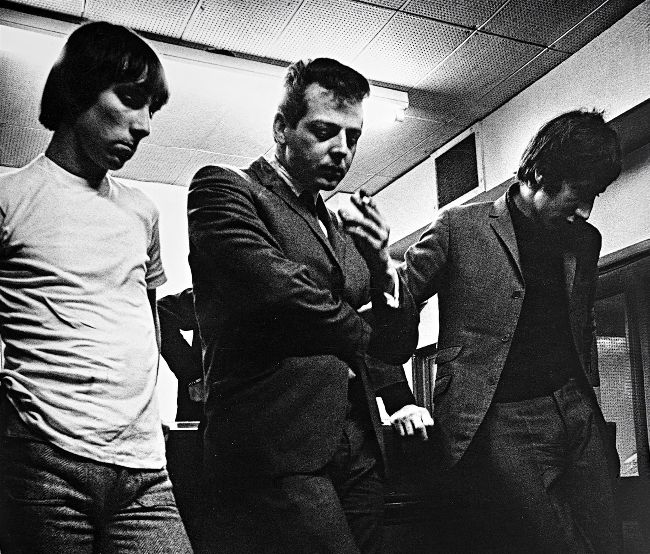
Next generation: Shel Talmy in London’s IBC studios with The Who’s Keith Moon and Pete Townshend, 1966 – “the primal immediacy of his productions remain a thing of wonder.”
Colin Jones/ TopFoto
Can’t Explain
Shel Talmy, legendary producer of The Kinks, The Who and more, left us on November 13.
“IF
YOU’RE reading this now, this is my
final vignette, as I am no longer residing on this plane of existence,” ran Shel Talmy’s strikingly upbeat, preprepared farewell for the online readers of his production yarns. “I’ve had a good run, and I am delighted it lasted as long as it did. I’m also delighted that I am told I have a legacy that will last even longer.”