HOW TO BUY
Curtis Mayfield
Taking nothing less than the supreme best.
By Andrew Male.
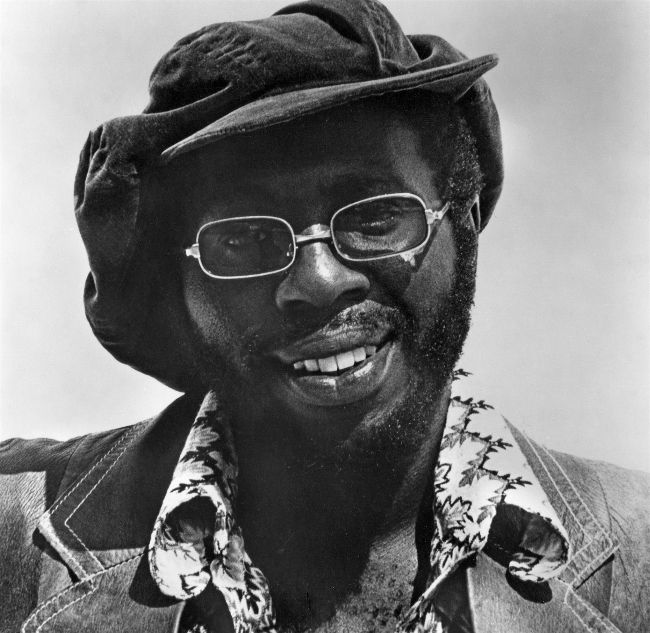
Love to the people: Curtis Mayfield, the definitive heart and soul man, in 1973.
Alamy, Levy/Dalle/eyevine
IT’S FAIR to say that in 2024 Curtis Mayfield is still under rated. The Chicago-bor n singer-songwriter, producer, guitarist and record label boss died back in 1999, aged just 57, after having spent a whole decade as a quadriplegic, paralysed from the neck down after a stage lighting rig fell on him at an outdoor concert in Brooklyn in August 1990. That decade-long slide into silence may have had something to do with it, but even within rock and soul literature he’s never mentioned in the same breath as Stevie Wonder, Al Green, Sly Stone, Aretha Franklin, James Brown or Mar vin Gaye, though he arguably achieved more than all of them.
Raised in poverty, a high-school drop-out and teenage gospel singer in his grandmother ’s church, Mayfield formed The Impressions with high-school friend Jerr y Butler in 1956, aged just 14. Blending soul melodies with gospel har monies, politically conscious lyrics, and a distinctive, selftaught rhythm-guitar style (influenced by Andrés Segovia) that would come to influence Jimi Hendrix, The Impressions had a string of Top 20 US chart hits before Mayfield left the group in 1969 to go solo and concentrate on his just-launched record label, Curtom.
“The music of Cur tis Mayfield captures the duality of the Black American experience.”
As songwriter, composer, producer, A&R man, and CEO, Mayfield created a powerful soul stable at Curtom, releasing a string of great albums, many co-written and produced by himself. In fact, an alter nate How To Buy could be compiled solely from LPs Mayfield produced and co-wrote during that time, including Gladys Knight & The Pips’ Claudine, Aretha Franklin’s Sparkle, The Staple Singers’ Let’s Do It Again, Baby Huey’s The Living Legend. But with this How To Buy, we’ve decided to concentrate on the albums that best expressed his individual talents and encapsulated Mayfield’s genius, albums that expressed the hope and pain, the pride and prejudice of African-American life and did so with a defiant, unifying power but also a rare poetic vulnerability. In concentrating on those long-players we’ve ignored best-ofs. That’s partly because streaming has done away with the need for a standard best-of, but also because there is still so much in the Mayfield vaults that is in need of a definitive archive box set. He’s more than deser ving of the gesture. For, more than Stevie Wonder, more than Mar vin Gaye, Al Green, Aretha Franklin, Sly Stone or James Brown, the music of Curtis Mayfield captures the duality of the Black American experience; the highs, the lows, the euphoria and the depression. A vision of the world, as he sang on Right On For The Darkness, “that put its heavy weight on me”.