Things have changed
Dylan’s career since 1991 gets the careful reading and listening reserved for what came before.
By Grayson Haver Currin.
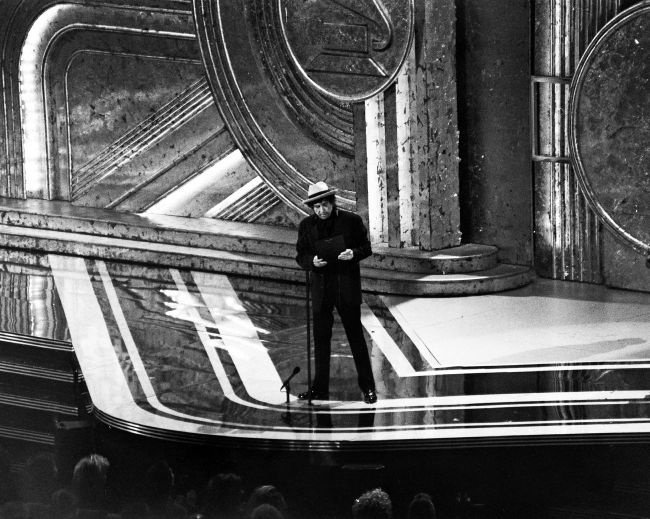
Shadow dancing: Bob Dylan accepts his Lifetime Achievement Grammy, Los Angeles, February 20, 1991.
Vinnie Zuffante/Getty
After The Flood: Inside Bob Dylan’s Memory Palace
★★★★
Robert Polito
LIVERIGHT/W.W. NORTON & CO. £25
ROBERT POLITO did not stick with Bob Dylan through the ’80s. The poet, teacher, and critic had been an ardent fan since he was a Boston kid who borrowed a copy of Highway 61 Revisited in the late ’60s, but the ’80s – all god rock and dangling earrings for Dylan, a sense of obdurate fatigue that suggested he had finally succumbed to the relentless weight of his legacy – made for an obvious exit. Polito’s return, though, was less obvious: Dylan’s February 1991 acceptance speech for a Grammy Lifetime Achievement Award. “It’s possible to become so defiled in this world that your own father and mother will abandon you,” Dylan said near his nadir, “and if that happens, God will always believe in your ability to mend your ways.” Polito was intrigued by what could come next.
What’s next remains ongoing: a second 35-year act that Polito posits “would surpass the lifetime achievements of approximately anyone else I could summon for resonant parallels.” Dylan began reassembling in a new image, using two albums of folk covers and the stage as a kind of living workshop to create the person who in turn created 1997’s Time Out Of Mind, a resurrection in rags.
Largely skipping the Dylan that has been painstakingly covered in endless prior volumes, Polito stages the most exhaustive accounting yet of Dylan’s career since he began to mend his ways – the quasi-memoir, the songwriting treatise, the highly variable concerts, the radio show, the Nobel speech and the way it spilled into Rough And Rowdy Ways, even the lingerie commercial and the