REAL GONE
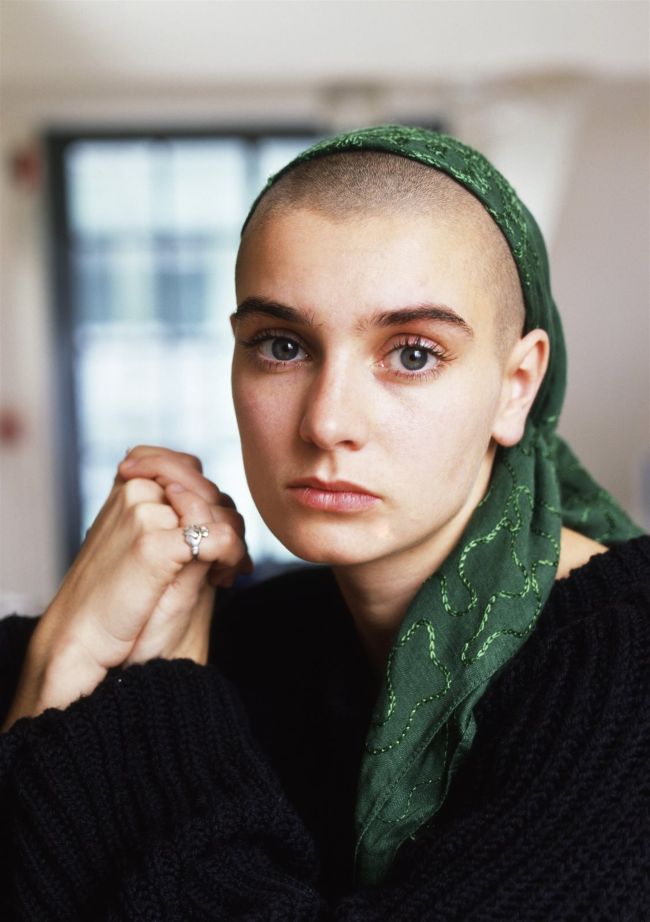
Mother courage: Sinéad O’Connor in London, 1991
Out Of The Depths
Once-in-a-generation voice of pain and catharsis Sinéad O’Connor left us on July 26.
IN 2014, SINÉAD O’CONNOR told MOJO, “I guess I’m someone who from the beginning of being a songwriter, I was singing because I had things to get off my chest.” It was something of an understatement. Arguably no singer since John Lennon – one of her chief influences, whom she admired for being “angry… sad, too… and brave” – seemed to be able to alchemise their trauma and pain so boldly into such cathartic and frequently stunning music.
Remarkably, there were only six months between the death of O’Connor’s mother – at whose hands she’d suffered years of physical abuse – in a car crash in February 1985 and the 18-year-old singer (born Sinéad Marie Bernadette O’Connor in Dublin on December 8, 1966) signing her first deal, with Ensign Records, in August 1985. Her grief was to be beautifully and movingly translated into the defiant, howling Troy, the standout track from her 1987 debut album, The Lion And The Cobra.
But if O’Connor seemed supremely confident as a performer from the outset, often it was a persona that she was forcing herself to assume. “I was a very over-anxious kind of person,” she told this writer in 2005. “Anyone who’d known me would tell you the opposite. But I guess there’s a few different people in here though, to be honest. The Sinéad O’Connor that’s on-stage singing is a very different character. It’s like you’re channelling something. I’ve got this thing coming through me that’s this very strong character, but I’m not that necessarily.”
Nonetheless, music grounded O’Connor, from her teenage years when she first picked up a guitar (a gift from a nurturing nun) and taught herself Bob Dylan’s To Ramona, going on to regularly win Dublin talent contests with her rendition of Lloyd Webber/Rice’s Don’t Cry For Me Argentina (“Everyone fucking loves it,” she later pointed out. “It wouldn’t matter if you farted it out of your arse”). Other disparate, formative influences included Barbra Streisand, David Bowie, Bob Marley and the Sex Pistols.
A stint singing with Dublin band Ton Ton Macoute brought her to the attention of Ensign, and the release of The Lion… followed when she was only 20 – the album a success on both sides of the Atlantic. But it was with its follow-up, 1990’s I Do Not Want What I Haven’t Got (Number 1 in both the UK and US), that O’Connor became a huge international star, powered by her heart-rending reading of Prince’s Nothing Compares 2 U and its starkly emotional video.
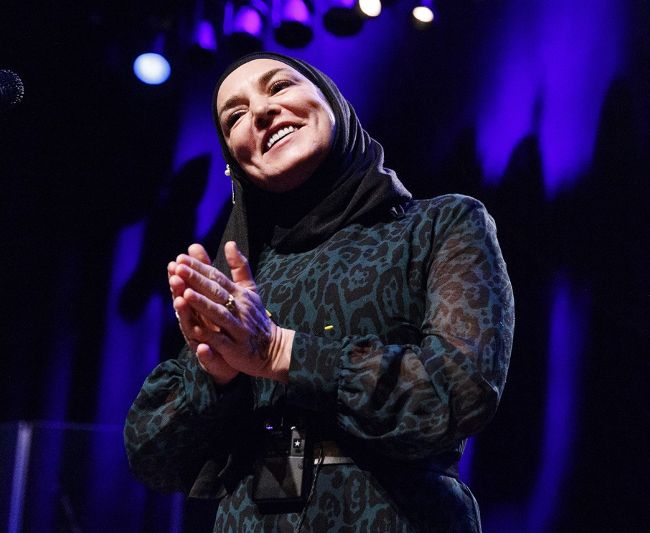
in Vancouver, February 1, 2020.
Then, she turned supernova, exploding her stardom with her ripping up of a photograph of Pope John Paul II – notably the one that had been on her mother’s bedroom wall – on Saturday Night Live on October 3, 1992, following an a cappella rendering of Marley’s War, tweaked to repeatedly include the words “child abuse” and ending with her stating, “Fight the real enemy”. A fortnight later, she was booed at a Bob Dylan tribute concert at Madison Square Garden, as protests were organised in New York involving the destruction of her albums (one of which – brilliantly – she attended in disguise, being interviewed by a TV news crew).
The controversy derailed her career in America, although O’Connor didn’t view it that way. “I feel that having a Number 1 record derailed my career and my tearing the photo put me back on the right track,” she reasoned in her 2021 memoir, Rememberings. “I wasn’t born to be a pop star. You have to be a good girl for that. Not be too troubled.”