THE TIME IS RIGHT
Sixty years ago, the world was ready for a brand new beat, one provided by breakthrough hits by Mary Wells Martha Reeves. The Supremes and The Temptations. 1964 would prove Motown's first Golden Year, and though The Beatles and LBJ had parts to play, the label's genius back room of players, writers and producers were its true stars,
writes Nelson George
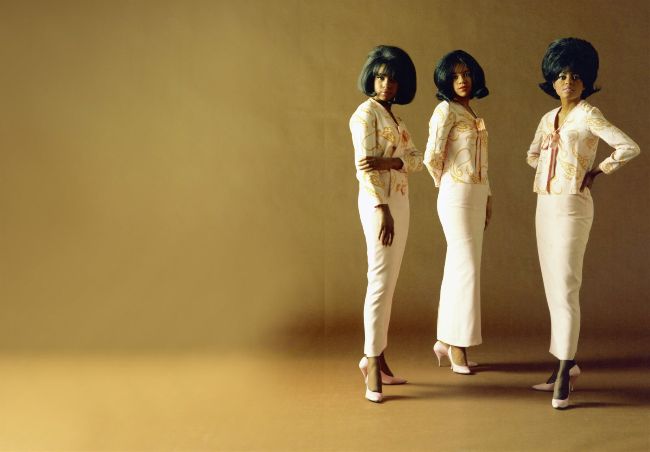
Prime movers: Motown golden girls The Supremes, 1964 (from left) Mary Wilson, Florence Ballard, Diana Ross.
Getty
ON APRIL 22, 1964, THE WORLD’S Fair opened in New York City, featuring exhibitions, performances and food from 80 nations, a symbol of international cooperation at the height of the Cold War. One of the highlights of the exposition was the Ford Motor Company’s introduction of the sleek Mustang, a sexy symbol of the Detroit-based corporation’s percolating production line.
Industrial progress in the United States was matched by advancements in civic life. President Lyndon B. Johnson, on his way to a landslide election victory, signed a voting rights bill that provided for direct federal intervention to register black voters in the segregated South and elsewhere. It was a move that reversed over a century of voter disenfranchisement in America.
Meanwhile, a British musical invasion was in full force. In 1964, The Beatles had six Number 1 hits in the United States and five other records that made the Top 10. Other British bands high on the charts included The Animals, Manfred Mann, The Kinks, Gerry & The Pacemakers, The Searchers, and Billy J. Kramer – all acts fronted by young white Englishmen with cute haircuts and nice suits, perfect fodder for teenage girls and Anglophile males across the United States.
But, as potent as the moptop massive from the United Kingdom was, a new creative force was rising from the US Midwest that would boldly proclaim itself “the sound of young America” though many of their countryfolk still considered their performers second-class citizens. Boosted in the media by wholehearted endorsements from John Lennon and Paul McCartney, this fresh pop approach would roll out triumphantly in 1964, uniting the world with a brand new beat.
AT MOTOWN RECORDS’ PEAK, FROM 1964 TO 1967, the Detroit label enjoyed 14 US Number 1 pop singles and 46 in the Top 15, plus 20 R&B Number 1s and 74 Top 15 records, a stunning period of productivity and success.
This exceptional run began in 1964 with four Number 1 pop singles: My Guy by Mary Wells, written and produced by William ‘Smokey’ Robinson, and Where Did Our Love Go?, Baby Love and Come See About Me by The Supremes, all written by Eddie Holland, Lamont Dozier and Brian Holland, and produced by Brian Holland and Dozier. Greatest of all, perhaps, was Dancing In The Street by Martha And The Vandellas: a Number 2 hit, written by Marvin Gaye with William Stevenson, who produced the track, and still one of the greatest records ever made.
Motown founder Berry Gordy had been writing hits since the mid ’50s (Jackie Wilson’s Reet Petite – an international smash in 1957 – and Lonely Teardrops – a US Top 10 in 1959), and his label and its affiliates had been consistent hitmakers since their inception in 1959. But in 1964 something special crystallised in the basement studio of 2648 West Grand Boulevard – the address subsequently mythologised as ‘Hitsville’ – that charmed the planet as profoundly as anything coming out of Liverpool. This black-owned record company from the Motor City had a sound generated by a veritable production line of composers, musicians and singers that rivalled Henry Ford’s innovative River Rouge factory.