GOING LEGIT
Antony de Heveningham looks at the challenges facing mountain bike trail builders striving for recognition.
WORDS ANTONY DE HEVENINGHAM
Credit: Saskia Dugon
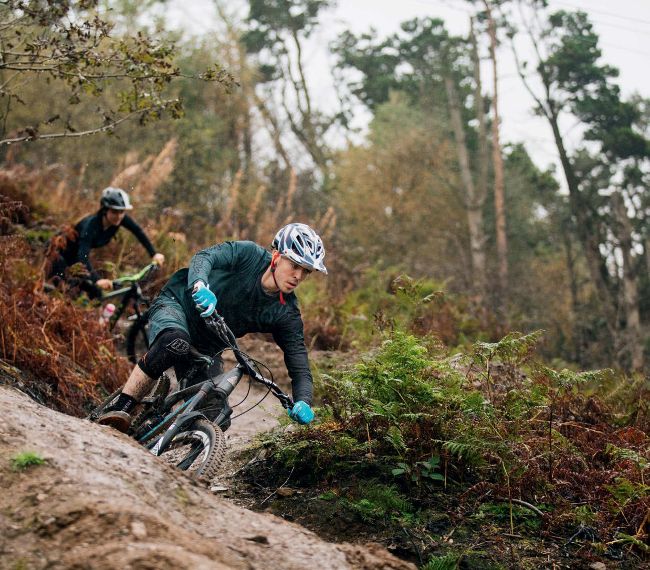
Trails are the foundation of mountain biking. The dirt beneath our wheels defines what our sport is. And trails have been built by mountain bikers, for mountain bikers, probably ever since the sport began. In the last 12 months, the lack of travel and an abundance of free time have seen a huge surge in building with local woods being transformed into playgrounds for riders. But there’s a catch: much of this has been done without permission from landowners. Some spots have remained local secrets but with commercial bike parks and trail centres closed during lockdowns, more and more unauthorised trails have been attracting the wrong kind of attention. This can mean anything from grumbles over parking and litter to trails bulldozed out of existence.
For some, this cycle of creation and destruction is an acceptable price to pay for having somewhere to ride. But for others, it’s tough to see trails lost and hard work go to waste. An obvious solution would be to talk to landowners and get some sort of agreement that, within certain boundaries, permits riding and building on the land. But this can be a much more difficult and convoluted process than it seems.
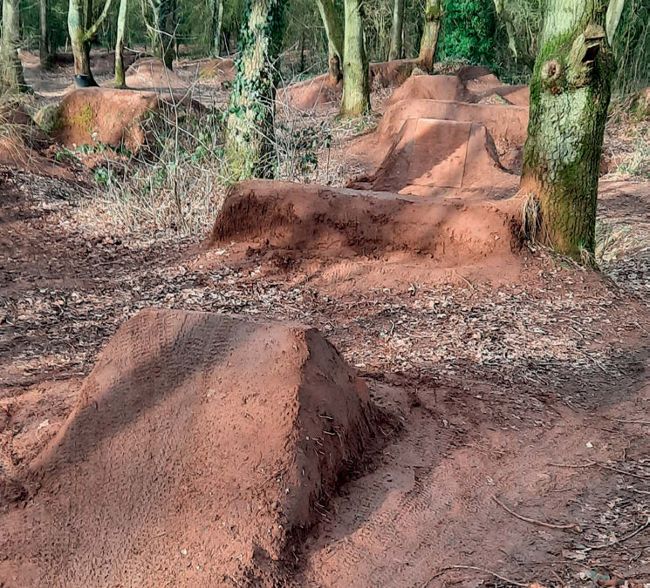
Burlish dirt jumps
PHOTOGRAPHY CREDITED
Burlish Bike Park
Hannah Escott is a former national 4X champion who’s found herself leading a push to turn Burlish dirt jump trails in Worcestershire into a sanctioned bike park. After a fraught year of lockdowns and conflicts that saw some of her nearby riding spots chained off by the locals and others rendered unrideable by land managers, she was contacted by the county council. They’d been made aware of a site owned by a local property developer, which over the past decades had become home to a sizeable network of trails.
“It was land left over from a housing development and it turned out he didn’t even know he owned it! He found a 15-acre site with a lot of dirt jumps –a huge liability risk, but also clearly somewhere that was loved and important to the users. As the landowner, he would have had no choice but to bulldoze it. He went to the local council to ask if they could take it on, but they didn’t want it. I’m well known locally as ‘the bike lady’ so the council contacted me. Things moved really fast and having first heard about it in August, I met the landowner in September, when it turned out he wanted to give me – yes, give me – the land.”