Lockwood Leviathans!
High winds, soaring temperatures and difficult banks are just for starters… Kush Rattan also has tenacious tufties, pesky kids and a population explosion of freshwater snails to deal with before he banks any resident carp! but what special carp they are…
BY KUSH RATTAN
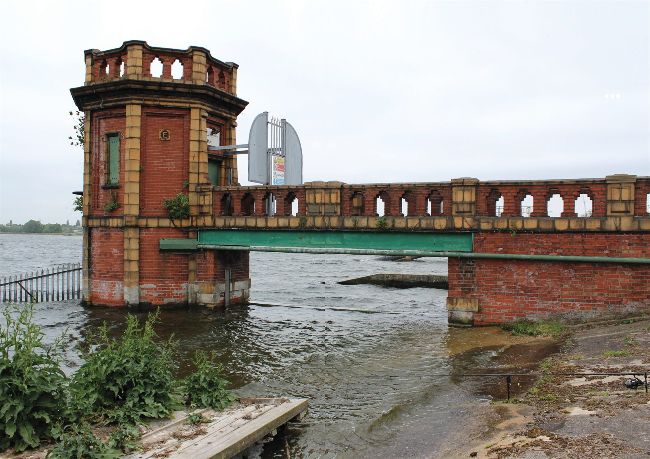
The mighty Lockwood on a grey, overcast day
‘A HUGELONDON RESERVOIR, SOMETIMES WITH WAVES
ON IT ALMOSTLIKE THE SEA.’
THIS WAS HOW LOCKWOOD RESERVOIR WAS DESCRIBED IN THE BEEKAY GUIDE TO BRITISH AND EUROPEAN CARP WATERS IN THE EARLY 1990S.
OFTEN, THE 80-ACRE Victorian reservoir was regarded (at the time) as one of the hardest waters in the country. With days-only fishing and depths of 34ft, this concrete bowl was built above ground level. As such, you needed to climb the fifty or so steps, just to get a view of this unique water. There were no trees or bushes for cover; it was just you versus the elements.
Built in the early 1900s by East Waterworks as a holding reservoir, I believe it was first stocked in the early 1970s by Thames Water’s social club, and which ran it. Its magnificent carp flourished until the venue was drained in 1999, when virtually all were netted and moved on.
Prior to its draining, I was fishing across the road on the West Warwick. We’d heard rumours of monster carp over there, and Lockwood definitely had an aura about it. The anglers who fished it were hard, seasoned guys— the likes of ‘Cut-throat Kev’, ‘Bungalow’ Phil Harper, John Carver, and Taplow hauler Martin Clarke, to name but a few—and we’d heard that they could cast miles towards the middle!
Fast-forward to 2017, and all the originals were no more. The twenty or so remaining carp left were renegade fish that had been moved over from the other reservoirs. I knew of three decent fish: two commons and one mirror. When drained in 1999, I took several photos of the contours of the lake, and the old Victorian towers and huge pipes which ran into it—who said it was featureless! I didn’t show anyone these photos, but have included them in this piece.
Late winter, I began taking my many walks around the reservoir, trying to spot any signs of carp on the back of the north-westerly wind, especially on sunny days. This meant a long trek to the far end a mile away. What I did notice immediately, was the abundance of clumps of zebra mussels all the way around the reservoir. Birds must have brought them up the bank, and climbing down from the concrete bowl into the lake, I found the whole shoreline littered with crushed shells. All you could hear was the crunch of them underfoot as you walked. After speaking to contractors on the complex, it was clear that the lakes were infested with these mussels—they would also block the pipes between the reservoirs.
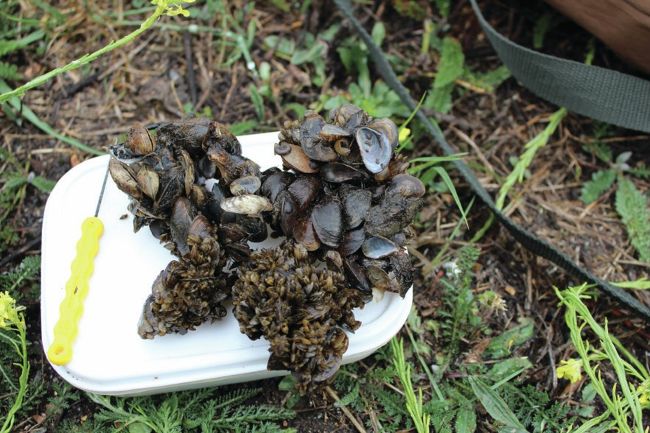
A. ZEBRA MUSSELS FOR DAYS!
“THE ABUNDANCE OF BIRDLIFE ON THERE WAS HORRENDOUS…
AND YOU
COULD
BE OVER
A MILE
FROM
THE FISH!”
When eventually I did start to fish, I tried near one of the underwater pipes, where it ended about 40yds out. Here, there was a small brick wall with rocks around it. I leaded about, but the odd miscast resulted in my 20lb line getting totally shredded. A major rethink was on the cards. What were the chances of a carp picking up a bait amongst thousands of zebra mussels? Even if they did find it, it would only result in a cut-off! I needed to find the fish close in, on the concrete slabs as they sloped into the abyss. It was pointless baiting up, though. The abundance of birdlife on there was horrendous… and you could be over a mile from the fish! Apart from birdwatchers, I was still to see another person on there. A few walked over from the Maynard Reservoirs, but duly went back when the massive localised winds caught them out. In the early spring, there was a period of big northwesterlies that lasted about six weeks. I remember the mile-long walk and hailstones smashing into me as I made my way to the far tower.