EYE SEE YOU
Your chickens’ vision is not what you think!
BY DANIEL JOHNSON
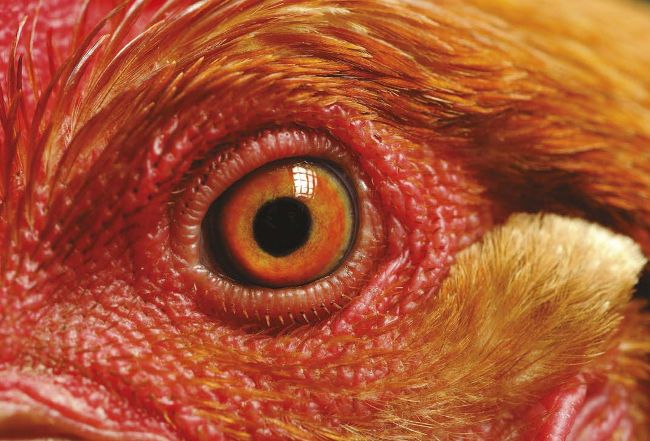
Chickens are tetrachromatic, having four types of cones that let them see red, blue and green light, as well as ultraviolet light.
Knowledge is a key part of animal care. Sure, the physical work plays a large role, but a solid understanding of your chickens’ physiology is important for ensuring you provide the best care you can. Plus, you’ll increase your own enjoyment of farming when you take the time to learn some of the fascinating biology of these animals that you spend so much time with. To that end, we’ll take a “look” at one very interesting attribute of your chickens: their eyesight.
At first, you might not think there would be much to say about the topic; chickens have eyes, and aren’t they pretty much like ours? While there certainly are some similarities, chicken vision is substantially different from ours, and understanding the hows and whys can help explain some unique chicken behaviors.
MONOCULAR VISION
People have what is called binocular vision. The word “binocular” in everyday use might imply magnification, but in biology, binocular vision just means that both eyes work together to form a single image. It’s not that you can’t see with just one eye, but both eyes are designed to function in tandem and produce a 3D image with depth perception. And, all things being equal, two eyes focusing together produce a sharper image.