Nutrient Necessities
Feed your hens the correct essentials for a healthy flock and nutritious eggs and meat.
by Bill Graves
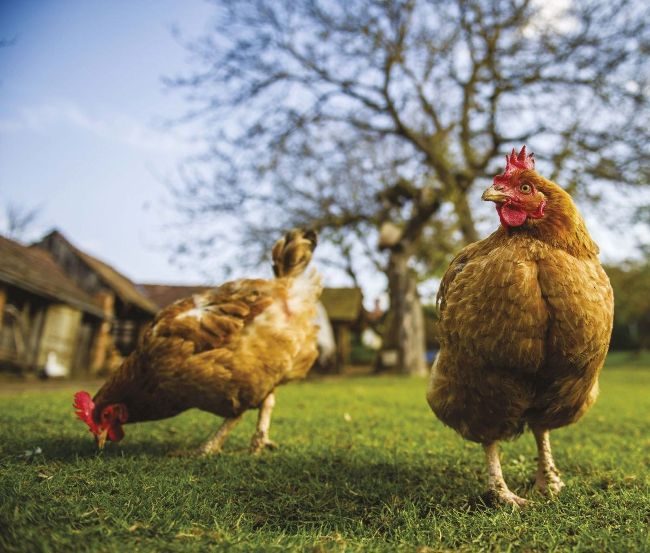
napocska/shutterstock
Everyone who keeps chickens should have a simple knowledge of nutrition and how what we put into our hens or meat birds has an impact on their health, longevity and levels of production. It should be noted that volumes have been written about nutrients, animal rations and general feeding practices. Here, we’re going to stick with the basics.
For this overview, we’ll glimpse all six classes of nutrients. Each grouping is related, and they interact metabolically to help maintain the health of chickens. Each category also has members within the class that are essential.
An essential nutrient is a specific molecule within a morsel of food that absolutely must be ingested by the animal. For a hen, it’s some kind of molecule that she can’t produce on her own. She must eat it. A perfect example is water. A chicken can’t produce water and yet a chicken - or any other animal - must drink water! Therefore, it’s essential. It’s one of the reasons scientists look for water in outer space: If there is no water, there is no life as we know it.
WATER
So, water is our first example of an essential nutrient. It is also a stand-alone nutrient. Water must be given to all animals free-choice. In other words, clean water must be available at all times. When chickens and other animals wake in the morning, they’ll need water fairly soon. The amount of water that they consume will also affect the amount of food they eat and even their mood and stress level.
Even though chickens don’t have sweat glands, they do lose water in other ways. Most moisture or water loss occurs when they defecate, even more is lost just because of breathing.
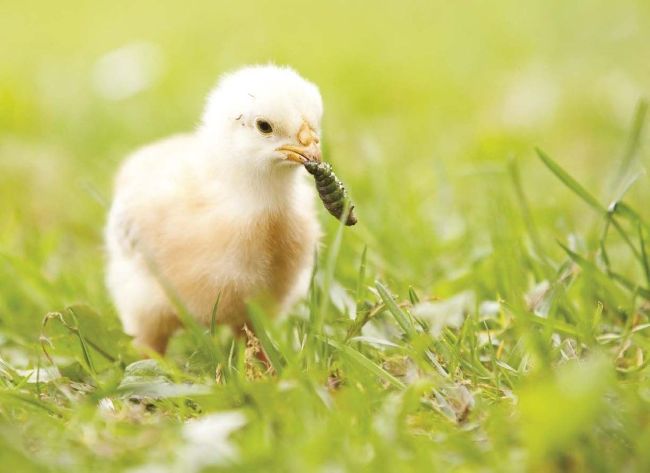
Insects, grasshoppers, flies, spiders, crickets, ticks and many other multi-legged creatures are hunted for sport and snack by our dinosaur descendants!
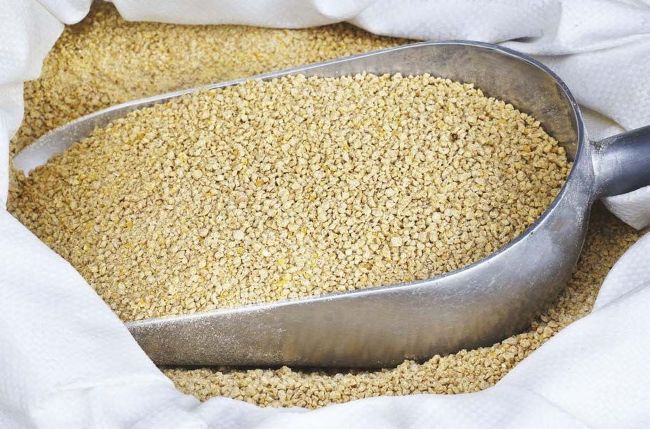
For the most nutritious eggs and meat, be sure to feed your flock a high-quality feed.
Obviously, death could occur quickly if the coop was to run out of water! Never deprive your hens by filling a bowl at your convenience. Use automatic waterers or nozzles to provide a constant source of water, if possible, and make sure it doesn’t clog or freeze. In addition to helping the flock maintain body temperature, water is related to every metabolic activity in a bird’s body. Because there is water within the cells, blood and bones, chickens must maintain between 65% and 70% water by weight.