ODES TO JOY
WITH 2019 MARKING THE 40TH ANNIVERSARY OF JOY DIVISION’S UNKNOWN PLEASURES, PETER HOOK TELLS JONATHAN WRIGHT ABOUT THE “WONDERFUL OUT-OF-CONTROL EXCITEMENT” OF MAKING ONE OF THE BEST DEBUT ALBUMS OF ALL TIME
JOY DIVISION
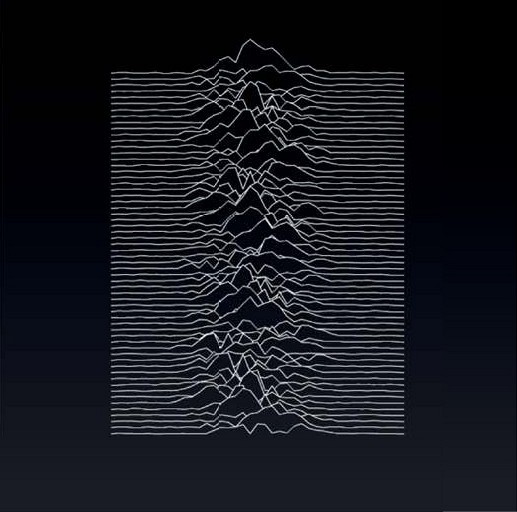
Unknown Pleasures’ iconic cover artwork was designed by Peter Saville, using a data plot of signals from a radio pulsar
Over the course of their brief career, Joy Division made just a single appearance on national television. In September 1979, the band performed Transmission and She’s Lost Control on a BBC2 proto-yoof show, Something Else. All of the elements that made Joy Division so compelling are in place: skittish drum patterns, the swapping of lead lines between guitar and bass, and a collective demeanour pitched somewhere between nerdy and belligerent. And then there’s Ian Curtis, first twitching as he gets lost in the music before dancing like a man possessed, seemingly oblivious to his surroundings.
The contrast between the band’s first regional TV appearance, a performance of Shadowplay introduced by Tony Wilson for Granada Reports a year previously, is slight yet telling, a matter of more confidence, more experience, better clothes even. The Joy Division of autumn 1978 are reaching, rich in promise, but by 1979 they’re the finished article, scarily good. With 2019 marking the 40th anniversary of the release of Unknown Pleasures, it seems an apposite moment to ask, what alchemy made this possible?
“The thing is, probably the worst person you could talk to about it is me because for us it was such a struggle,” laughs bassist Peter Hook, speaking down the line from Portugal, where he’s playing dates with his band, The Light. “It was a struggle to get on Something Else at that time. It was a struggle to survive as a group. It was a struggle to get every gig. There was nothing about it that was easy.”
In part, this was because Joy Division were helping to invent a new way of doing things, out of necessity as much as anything else. Having formed in 1976, Joy Division, initially named The Stiff Kittens – likely at the suggestion of Buzzcocks manager Richard Boon – and then Warsaw, had already recorded a latterly much-bootlegged album for RCA offshoot Grapevine Records in May 1978. They hated the results and, with the help of new manager Rob Gretton, freed themselves from the contract.