THE LOWDOWN: BEE GEES
INARGUABLY THE ISLE OF MAN’S MOST SUCCESSFUL POP ACT OF ALL TIME – SHIFTING MORE THAN 220 MILLION RECORDS WORLDWIDE – THE BEE GEES FIRST FOUND FAME IN THE 60S, BEFORE GOING GLOBAL AT THE HEIGHT OF THE DISCO BOOM THE FOLLOWING DECADE
DAVID BURKE
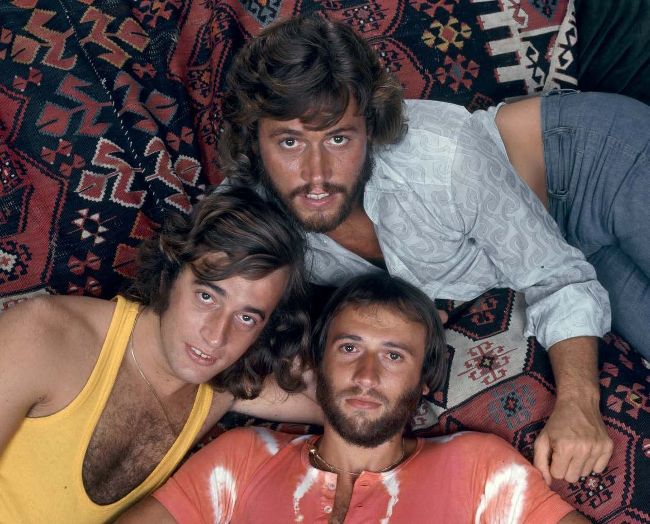
© Ed Caraeff/Getty Images
The brothers Gibb – Barry, Robin and Maurice – cut their musical teeth as The Rattlesnakes on the Manchester skiffle scene of the mid 50s, having relocated to the north of England metropolis from their native Isle of Man. But it was another move – this time to Australia – that birthed the Bee Gees, and the beginning of a glorious career spanning seven decades. Early triumphs down under included Wine And Women and Spicks And Specks, They returned to Blighty in 1967, at the behest of impresario Robert Stigwood, who, describing them as the year’s “most significant new talent”, signed them to Polydor Records.
Stigwood’s faith in the siblings was validated almost immediately, as New York Mining Disaster 1941 and To Love Somebody both made the lower reaches of the UK chart. Then came Massachusetts, their first No.1, repeated with I’ve Gotta Get A Message To You in 1968. The group were also establishing themselves in the United States; I Started A Joke climbed to No.6 on the Billboard chart. The first half of the 70s was a relatively fallow period at home, although they did secure pole position in the US with How Can You Mend A Broken Heart.
The advent of disco was reflected on their albums Main Course and Children Of The World, both of which featured further American chart-toppers in Jive Talkin’ and You Should Be Dancing. But even this was merely a preamble to the tour-de-force that was Saturday Night Fever. This was the biggestselling soundtrack of all time, and with good reason, too, given the matchless majesty of Stayin’ Alive, More Than A Woman and How Deep Is Your Love. It was the apogee of a movement that would soon be reduced to ashes, literally, as disco records were publicly burned in the US. In the 80s, You Win Again gave the Bee Gees their fifth and final UK No.1 (after Night Fever and Tragedy).
Barry Gibb remains the sole surviving member, following the deaths of Maurice in 2003, and Robin nine years later.
THE MUST-HAVE ALBUMS
MAIN COURSE
1975
More of a starter
It was Eric Clapton who encouraged the Bee Gees to work on Main Course at Criteria Studios in Miami. Barry Gibb recalled: “Eric said, ‘I’ve just made an album called 461 Ocean Boulevard in Miami. Why don’t you guys go to America and do the same, and maybe the change of environment will do something for you?’ I think it was really good advice.”
With Arif Mardin producing, the Bee Gees infused their sound with influences absorbed from Miami’s contemporary dance-music scene and clocked up three US hits, among them a second No.1, Jive Talkin’. “We decided that it was our big chance to get serious about our music again,” said Maurice. Reputedly, Main Course was the album that marked the debut of Barry’s trademark falsetto.