EFTERKLANG
Producer Mads
Brauer explains
how the
experimental
Danish trio have
gone back to
basics for their
latest album – and
back to nature…
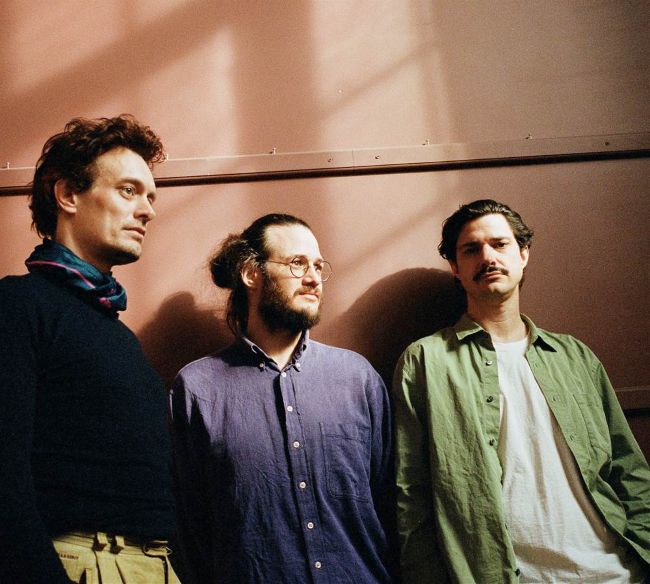
Photo © Dennis Morton
> Mads Brauer’s Copenhagen home isn’t far from the beach. Even in the middle of this busy, 21st century city with its 10 million tourists, he likes the idea that there is still a small connection with nature.
“Something as simple as the smell of the sea can make that connection for me,” explains ‘electronics’ chief Brauer. “The salty air… the strong breeze. Without it, I think the music of Efterklang would suffer.”
Along with Casper Clausen and Rasmus Stolberg, Brauer is part of the core trio that has existed at the heart of Efterklang for 20 years. The experimental soundscapers have been friends since school, growing up in a preinternet rural Denmark that was dominated by the Top 40 and daytime radio.
“When you think back, it’s amazing how limited our access to music was,” remembers Brauer. “The only alternative music I got to hear was grunge when Nirvana became huge. At the time, I was playing the guitar, so I was at least able to have some fun. Turn up the amp and make some noise.
“We were just young kids who didn’t really know too much about all the other music that was out there in the world. It sounds kinda scary, really. All this music was happening, but we didn’t know about it. It was only after we all moved to Copenhagen when I was 18 that things started to change. Suddenly, we had more record shops and clubs to choose from, and the internet was beginning to give everyone access to music from around the world.
“It wasn’t long after we got to Copenhagen that I heard the Autechre album, Amber. That was the point at which music changed. By the time I got to the last track, I was bored with the guitar. As a band, we started to think seriously about what else we could do with our music. How far could we travel with sound?”
The band’s debut release, 2003’s Springer, would soon enough answer that question. A mix of otherworldly melodies, chiming guitars, drifting synth drones, glitched rhythms and melancholy vocals, it shared DNA with the likes of Sigur Rós and the aforementioned Autechre, but still managed to add something that was distinctly Efterklang.
Tripper soon followed in 2004, but it was the 2007 album, Parades, where the band really found what they were looking for. How would you describe Parades? An acoustic/electronic cabaret? Or the soundtrack to an unreleased Lars Von Trier mind-bender? Maybe the best of Vernon Elliott scored for glitch plugins? Such was Parades’ impact that, in 2008, the Danish National Chamber Orchestra enquired about a collaboration and ended up performing the album live with the band. (One of the performances is out there on YouTube, complete with a selection of ‘interesting’ hats.)