a-v with halina rice / tech on tour
SOUND + VISION
A-V artist Halina Rice tells Martin Delaney about the evolutionary process that took her immersive live show from dream to reality
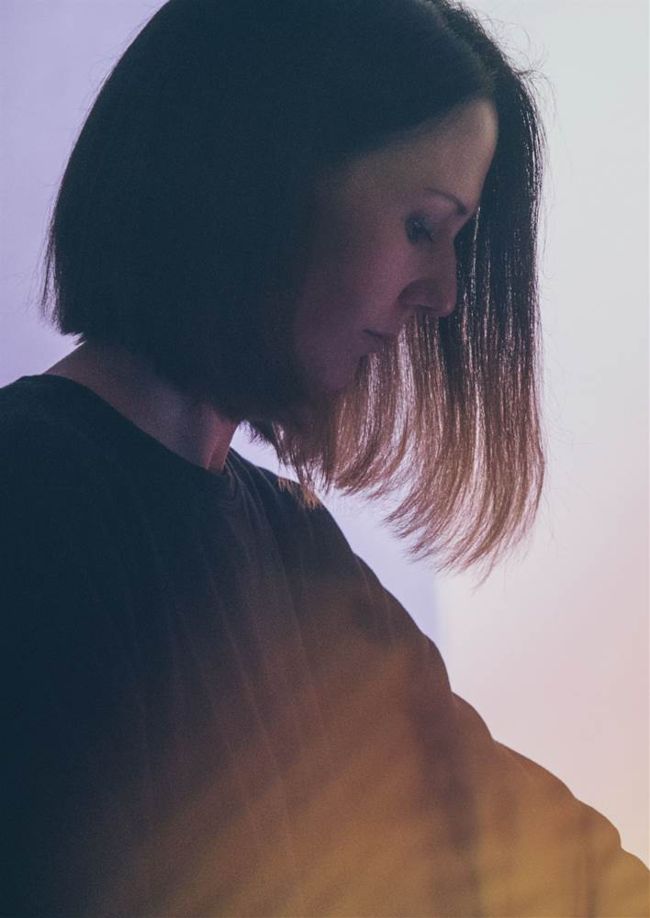
Photo: Michal Augustini
> It doesn’t take much to put together your own music production setup now, and it doesn’t even need a dedicated room, maybe not even a whole table! We’ve all heard the stories about successful artists who thrive on simple home set-ups. What’s even better is that the small production set-up can become the live rig as well. Even video, which used to be complicated and expensive, has become more democratic and accessible, as projects become ever cheaper, more reliable, and more portable. In fact, most venues have a projector now, and it’s usually just a matter of checking ahead regarding cables and adaptors for your computer.
Halina Rice is an outstanding example of an artist who endeavours to bring an immersive experience to venues where it might not otherwise happen, while also being able to scale it up further when required. Visit one of her shows and you’ll be exposed to atmospheric IDM and carefully crafted sounds, some spacey, some beat-driven, while also witnessing a combination of programmed and real-time visuals, featuring mixed reality projections, haze, and DMX-controlled lighting. This is a true A-V set, with all elements fully integrated and responsive. Something like this doesn’t happen overnight. Halina has invested time, money, and energy, into developing the sound and the show. We talked to her about the concepts and techniques behind her original performances, while also getting some inside information about her complex setup.
Visionary sounds
“An early influence for me was the artist Rival Consoles, who’s on the Erased Tapes label, and produces audio, but also programmes his visuals in Max MSP. However, I’m equally interested in visual artists who cross over the other way to sound, such as Ryoji Ikeda, who created the Test Pattern show, most recently at 180 The Strand in London. This was primarily an installation that people can take part in, where there’s something like barcodes that are projected onto the floor and sound coming from all around, which appears to match the moving barcode type images. My first EP Krin came out in 2015, then the album Redux, in 2017. But I’d always really wanted to play live. I used Ableton Live and Push 1 at the time, and I was working with a VJ called Mowgli TV (www. mowgli.tv), who created beautiful monochromatic audio reactive visuals, that I was sending through Resolume, on the same laptop as Live.”