Windows to the past
Awesome, mysterious and compelling, fjords not only reveal what’s gone before – they also offer an important message about what might be to come
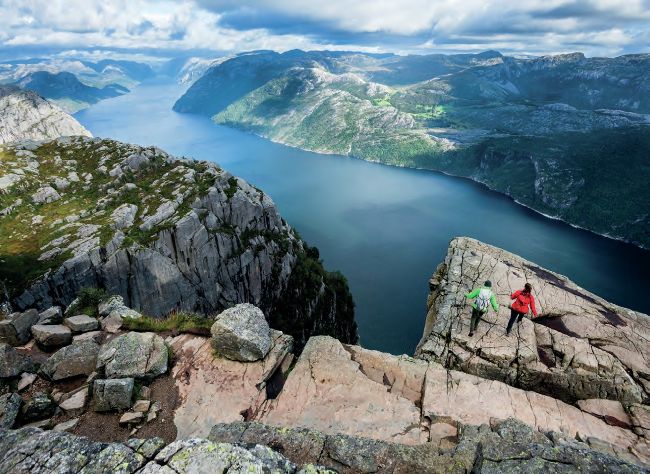
PHOTOGRAPH: (ABOVE) MATTIAS FREDRIKSSON /FJORD NORWAY
There’s a well-known Norwegian proverb: ‘Only one who wanders finds a new path.’ It’s a saying about adventuring, from a nation of people who love to explore in nature. But it could also apply to the creation of some of the scenery that the country’s most famous for – its spectacular fjords. These geological marvels were created by the wandering of huge glaciers of ice carving new paths through the landscape. In addition to Norway, fjords are found in many other parts of the world, including Alaska, Antarctica, Canada, Chile, Greenland, New Zealand, Russia, Scotland, Ireland and Tasmania, and their unique characteristics are valued by scientists and geologists, local communities and tourists alike. So, what is it about fjords that captures the imagination and what makes them so special?
A fjord is defined in geology as a long, narrow and deep body of water that reaches far inland, often with steep, rocky cliffs rearing up on either side. The water in some fjords is so deep that they have their own coral reefs or islands, as well as side arms. Professor John Howe is a marine geologist for the Scottish Association for Marine Science. Based in Oban, in the West Highlands, the charity works in partnership with organisations including the University of the Highlands and Islands. ‘Fjords are areas of indented coastline between the sea and the land,’ says John. ‘They’re places where the sea deepens towards the land and the water is separated from the open ocean by a shallow sill, which creates an interplay between freshwater and seawater.’ Some fjords, in places like the Antarctic, can be over 1,000m deep, with soft-sediment seabeds that create unique habitats for marine life.