HOW BESPOKE ARE package homes?
Chris Bates takes a look at how the package house route has evolved to respond to modern self-builders’ desire for ever more individual, design-led solutions for their schemes
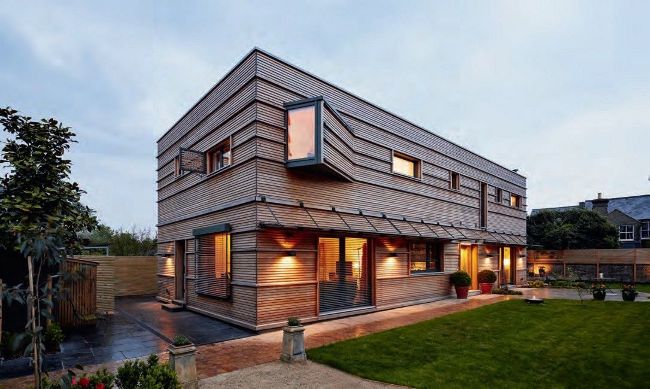
Designed by Baufritz partner architect Magnus Nilsson of Nilsson Pflugfelder, this modern Cambridge home on a backland site responds to the surrounding architecture – plus issues such as overlooking – while delivering a bold statement.
There are many advantages to working with a package company on your project. You’ll be able to pick-and-choose from a full suite of services, for example, ranging from the starter bundle of structural design and provision of the main building materials right up to full turnkey delivery of your new home.
This route also gives you the peace of mind of knowing that a significant portion of your scheme will be delivered by a single, experienced company. And you get cost certainty on that part of the project, too: the supplier’s involvement will usually be delivered on a fixed-price basis. But while the practical advantages are clear, does all this translate into the kind of design experience that today’s self-builder wants – and how cutting-edge can it get?
Taking stock
Some of you might associate package companies with pattern book homes. After all, when design and build firms started to become popular 40-odd years ago, many wooed clients with standardised plans and past schemes that could be easily tweaked to suit the customer’s lifestyle. Some suppliers stuck very much to that model over the years, recognising the economies of scale it could offer both parties. This stock design option is still around. These are the types of project we might now put at the ‘kit home’ or ‘self-finish’ end of the spectrum – offering great value for those on tight budgets. But while it promises more choice than going to a big developer, a standardised approach isn’t likely to offer the best response to the site.