CHOOSING A BUILD SYSTEM
From the solid feel of masonry to the speed and efficiency of timber frame, discover the benefits and key considerations involved in these mainstream construction methods
Selecting the system that forms the structural bones of your house is one of the biggest decisions you’ll make on your self build journey. Your aspirations for the scheme represent the most logical starting point for research on the different methods of construction available. For instance, if your goal is to create a highly insulated home that can be erected quickly, some form of factory-made system could provide an ideal fit. If, on the other hand, your aim is to establish a traditional home built by local trades, you might be more drawn towards brick and block. This quickfire guide addresses the key things you need to know about the main structural options used in the UK, to help you make the best choice for your self build.
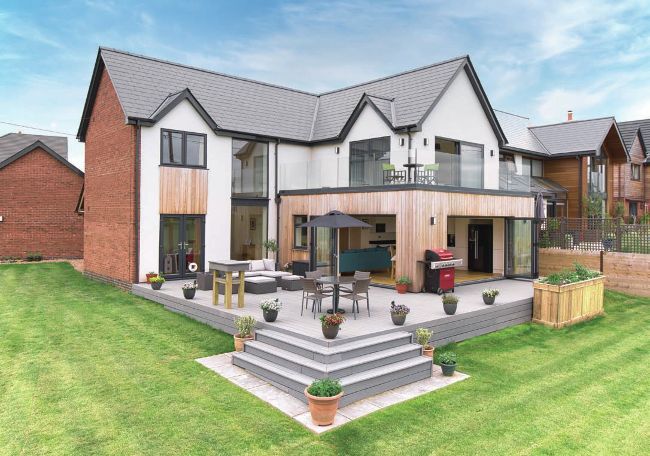
Timber cladding, white render and bricks have been used as finishes on this masonry home, designed by Base Architects
CARL BLANK
BRICK & BLOCK
How it works: Most contractors in the UK are experienced in delivering homes built using cavity wall construction, where an inner layer of blockwork is built up in courses on site, alongside an outer layer of brickwork. The space between the two leafs is filled with insulation. Thin joint masonry represents a variation on the brick and block theme, whereby a different type of mortar is used to bond the blocks together. This quick-drying solution allows the courses to be built up quicker than a traditional sand and cement mortar.